Workout Without Equipment: The Honest Guide To Training At Home
By:Author:Menletics Editorial
Updated on:September 30, 2026
- Does a Workout Without Equipment Actually Work?
- Why This Beats the Harder Alternative
- The Quantity Question: How Much, How Often
- The Practical Question: What Do You Actually Follow
- Comparison: Bodyweight Training Versus Gym Equipment
- The Forbidden Promise, Answered Honestly
- Levers That Change the Result
- How Long Until You See Results?
- Your First Four Weeks
- What Stalls Progress
- Why Menletics Works for This
- Final Thoughts
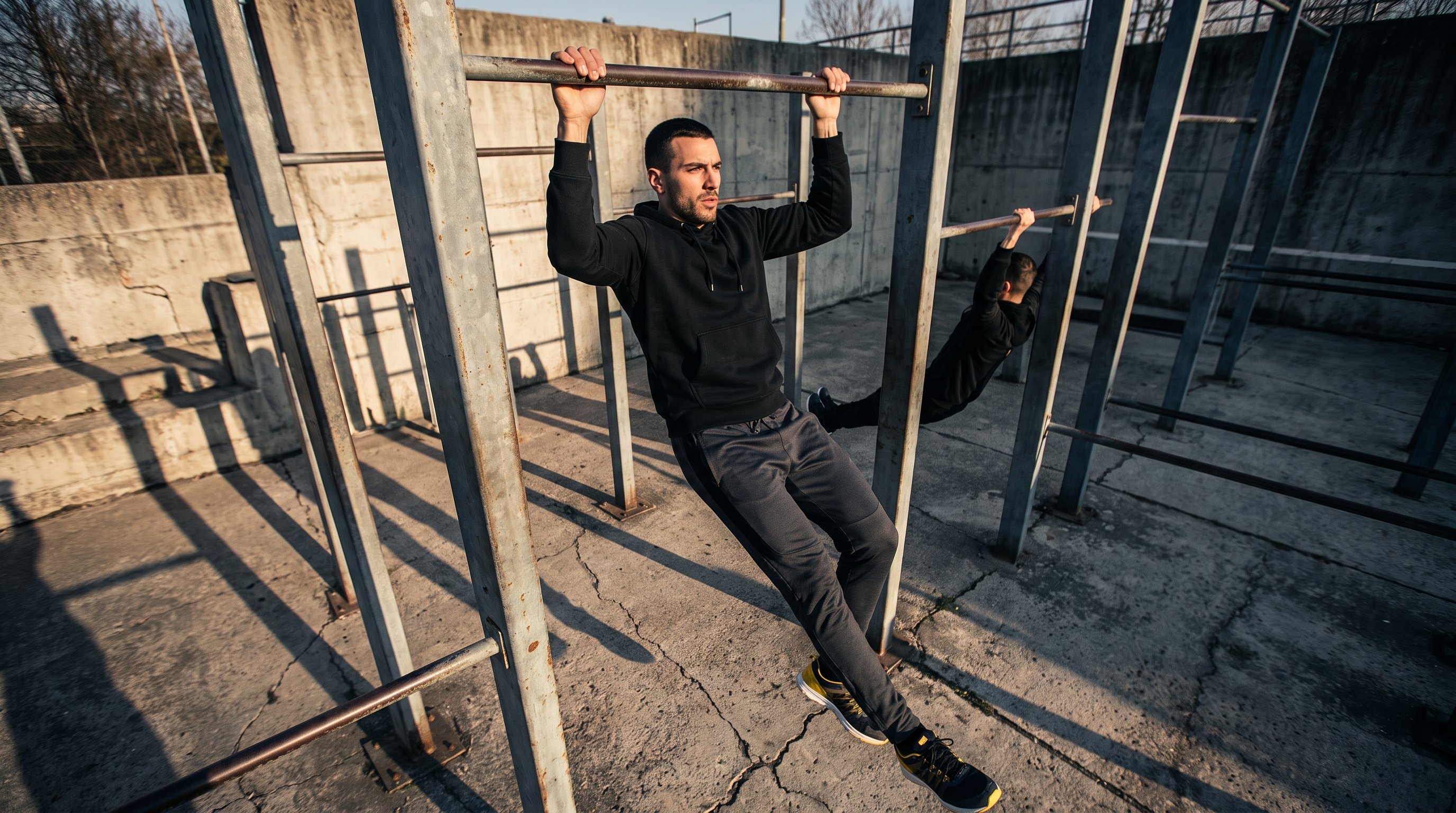
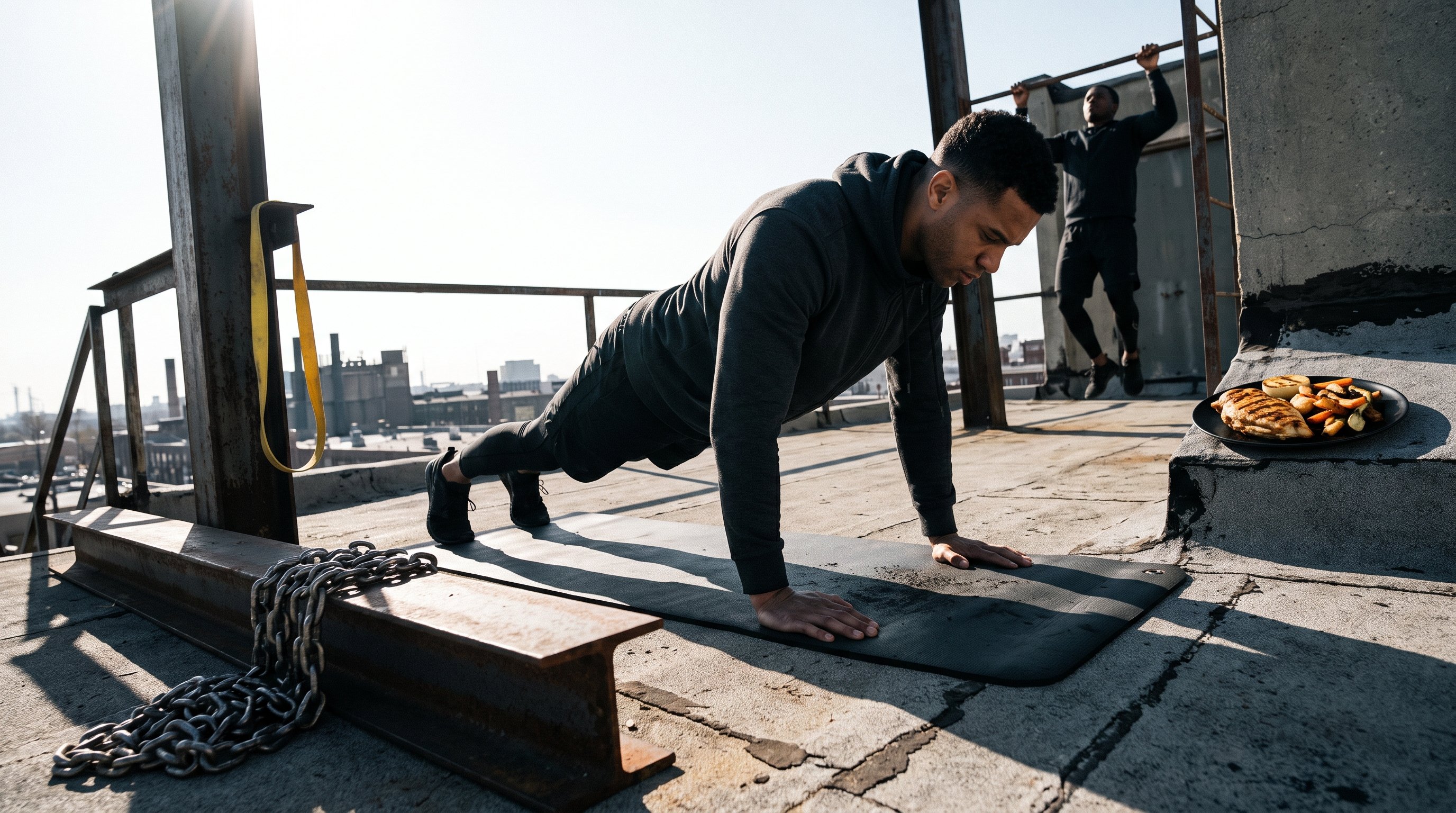
You do not need a single piece of metal to get stronger. A push up, a squat and a plank use nothing but your own bodyweight and gravity, and gravity does not need a membership.
The mechanism is simple: muscles respond to load, and your own bodyweight is a load. Change the angle, the tempo or the number of reps, and you change the challenge without ever touching a barbell.
This guide covers whether bodyweight training actually works, how much you need, what stalls people, and how to structure a first month that sticks.
Does a Workout Without Equipment Actually Work?
Yes, and the reason is arithmetic, not magic. Your muscles cannot tell the difference between resistance from a dumbbell and resistance from your own body weight held at an angle.
A squat asks your legs to lift and lower your full bodyweight, repeatedly. A push up asks your chest, shoulders and arms to press part of your bodyweight away from the floor.
Make the lever longer, slow the tempo down, or reduce the points of contact with the floor, and the same movement gets harder without adding a single kilogram.
That is the whole model behind bodyweight training: progression through position, not through plates.
Why This Beats the Harder Alternative
The hardest workout plan is the one you do not do. A gym membership adds a drive, a car park, a changing room and a queue for the machine you actually wanted.
Strip all of that out and the only thing left between you and training is deciding to start.

Adherence beats intensity almost every time. A moderate session you actually complete four times a week outperforms a brutal session you talk yourself out of.
Removing the equipment barrier removes the excuse, and that is worth more than any single exercise you could add to the plan.
The Quantity Question: How Much, How Often
There is no single number that fits every reader, but there is a sensible range to start from.
Three to five sessions a week, each built from a handful of movements covering pushing, pulling, legs and core, gives the body enough stimulus and enough recovery to adapt.
Find Your Own Number
Start at the low end of any range below and only add volume once the current amount feels genuinely manageable, not just tolerable.
| Goal | Frequency | Session Length |
|---|---|---|
Just starting out | 3 sessions weekly | 10-15 minutes |
Building consistency | 4 sessions weekly | 15-20 minutes |
Established routine | 5 sessions weekly | 20-30 minutes |
The exact numbers matter less than the pattern: something small and repeatable beats something large and occasional.
The Practical Question: What Do You Actually Follow
Knowing that bodyweight training works is one thing. Knowing which movements to do, in what order, on which day, is another problem entirely.
Most people who quit a no-equipment routine do not quit because it stopped working. They quit because they ran out of a plan and started guessing.
Menletics builds that structure for you: a progressive calisthenics workout plan tailored to your fitness and goals, so you always know what today's session is without opening five browser tabs.
It pairs the training side with a meal plan built around food you already like, plus trackers for steps, water and weight so progress stays visible instead of guessed at.
Comparison: Bodyweight Training Versus Gym Equipment
The real decision most people face is not which is objectively superior. It is which one they will still be doing in three months.
| Factor | Bodyweight | Gym Equipment |
|---|---|---|
Cost to start | No cost | Membership fees apply |
Time to begin | Immediate, any room | Travel time required |
Progression method | Angle, tempo, reps | Adding external weight |
Consistency barrier | Very low | Higher, more friction |
Space needed | A few square metres | Dedicated facility |
Neither column is wrong. The point is that the lower-friction option tends to get finished, and a finished session beats a perfect one you skipped.
The Forbidden Promise, Answered Honestly
No exercise, bodyweight or otherwise, burns fat from one specific area. The body does not let you choose where it draws energy from, no matter how many sit ups you add.
There is also no version of this that works overnight, and nothing here cures or reverses anything.
What actually happens is broader: consistent training across the whole body, paired with a sensible eating pattern, changes how you look and feel over time, not in one specific spot on command.
That is a less exciting sentence than a promise, but it is the honest one.
Levers That Change the Result
Three things move the needle more than any single exercise choice ever will.
What Actually Moves the Needle
- Showing up consistently - three sessions done every week beats five sessions planned and half-abandoned.
- Eating in a way you can hold - training creates the demand, but food determines whether the deficit or the surplus actually happens.
- Adding difficulty gradually - slowing a movement down or changing the angle keeps the same exercise challenging for months.
How Long Until You See Results?
This is where most people quit, right around the point where nothing visible has happened yet and the new habit still feels effortful.
There is no fixed week number to promise here, and anyone who gives you one is guessing.
What tends to shift first is how a session feels, not how you look; movements that felt hard start to feel merely uncomfortable, and that is the earliest signal worth paying attention to.
Sticking with the plan through that quiet stretch is the actual work.
Your First Four Weeks
The order of these four weeks matters more than the exact numbers in them.
| Week | Focus | Target |
|---|---|---|
Week 1 | Learn the movements | 3 short sessions |
Week 2 | Build the habit | 4 sessions, same length |
Week 3 | Add difficulty | Slower tempo or new angle |
Week 4 | Lock in consistency | 5 sessions, review progress |

Notice that week one is not about pushing hard. It is about making the movements familiar enough that week two does not feel like starting over.
What Stalls Progress
Skipping the Warm Up
Cold muscles make every movement feel harder than it is, so a few minutes of easy movement first pays for itself within the same session.
Chasing Reps Over Form
Rushing through a set to hit a number reduces how much work the target muscles actually do, so slow down and feel the movement instead of counting fast.
Doing the Same Session Forever
A body adapts to a fixed routine within weeks, so changing the angle, tempo or rep count keeps the challenge alive.
Ignoring Food Entirely
Training creates the opportunity for change, but what you eat decides whether that opportunity gets used, so pair sessions with an eating pattern you can actually sustain.
Starting Too Big
An ambitious plan that gets abandoned in week two is worse than a modest one still running in month three, so start smaller than you think you need to.
Why Menletics Works for This
Everything above points at the same conclusion: the plan that survives real life beats the plan that looks best on paper.
Menletics turns the four-week structure above into a progressive military calisthenics plan tailored to your fitness and goals, so the guesswork of what to do today disappears.
It also pairs training with a meal plan built from recipes created by nutritionists, plus trackers for steps, water, weight and fasting, and challenges designed to keep you consistent when motivation dips.
Final Thoughts
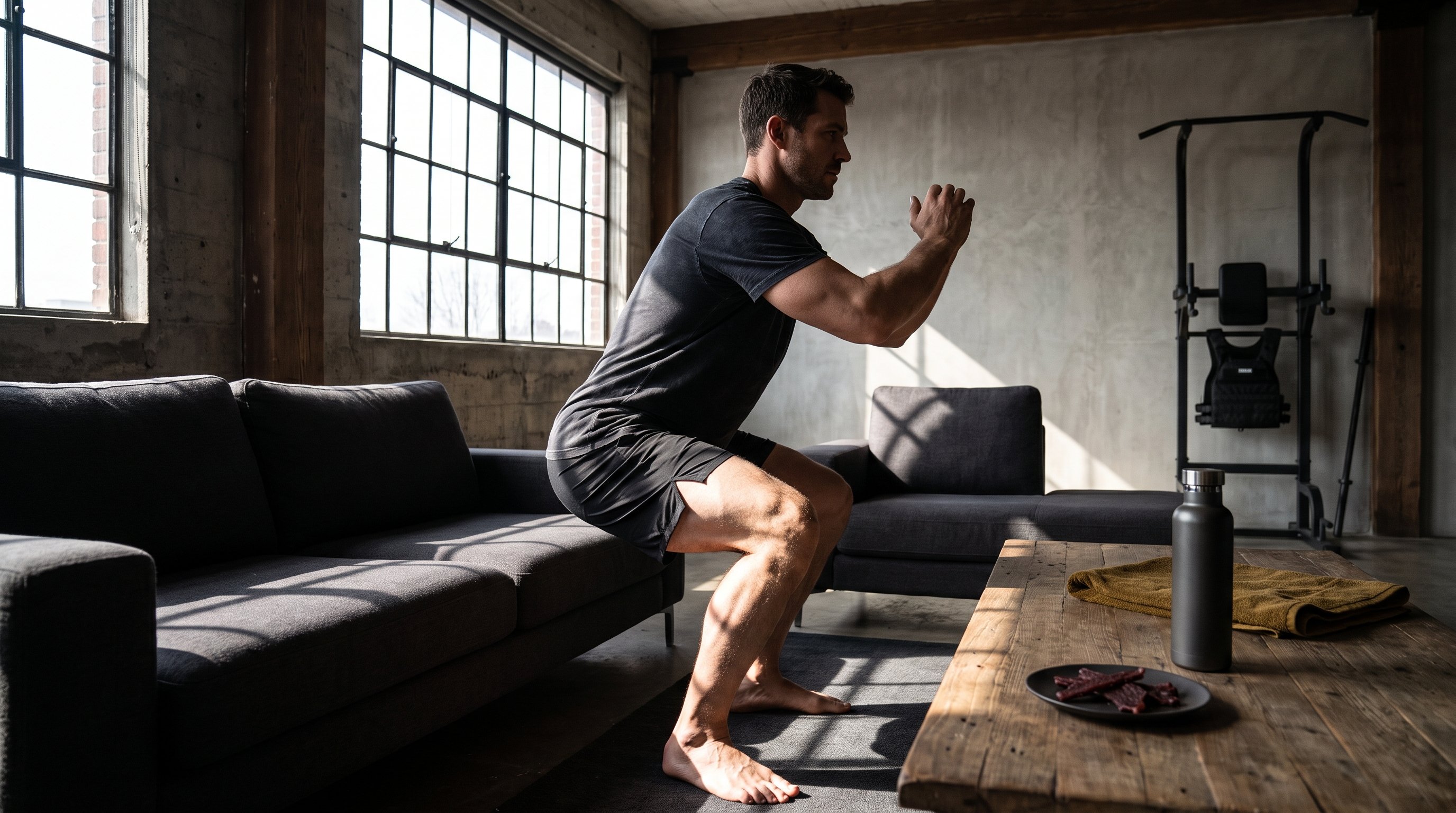
A workout without equipment is not a compromise version of real training. It is real training, structured around movements you can do in a bedroom, a garden or a hotel room.
The single action that matters most is starting this week's first session, and letting a plan like Menletics carry the structure so you only have to carry the effort.
FAQ
Yes, because muscle responds to load and your own bodyweight is a load. Changing the angle, tempo or rep range keeps that load challenging as you get stronger.
No, the physics of resistance do not care where the load comes from. What changes is the ceiling for very advanced lifters, which is a later problem for most people, not a starting one.
Most bodyweight movements need a few square metres, roughly the space of a yoga mat. Push ups, squats, lunges and planks all fit in that footprint.
That drop off is normal and it is exactly where a structured plan earns its place, since you are following a schedule instead of relying on willpower alone. Menletics builds in challenges and progress tracking so there is something concrete to aim at on the days motivation is low.
Share this post