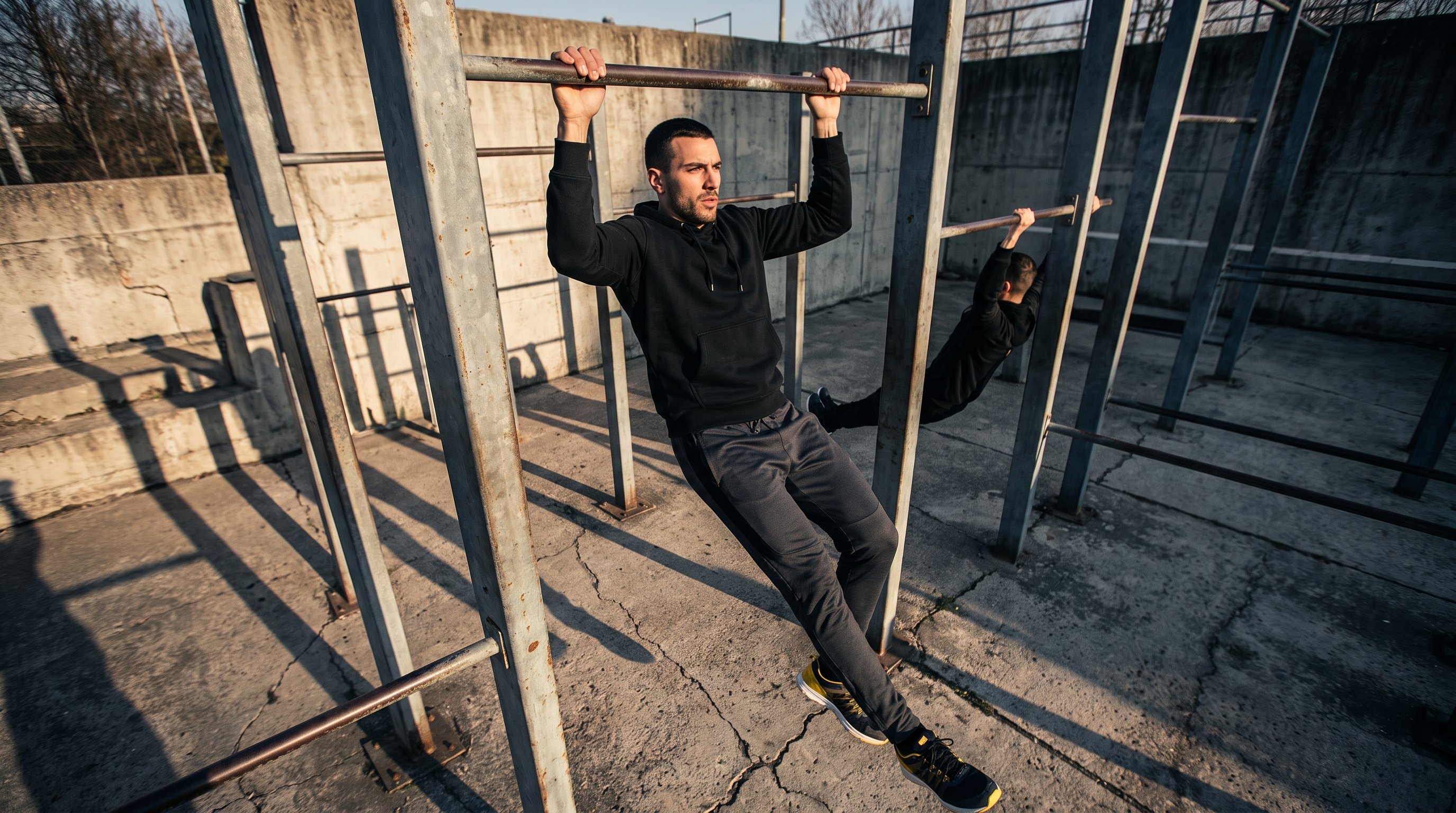
Bodyweight Workout For Men: The Honest Guide To Getting Started
By:Author:Menletics Editorial
Updated on:September 30, 2026

- Does a Bodyweight Workout for Men Actually Work?
- Why This Beats the Harder Alternative
- The Quantity Question: How Much, How Many, How Often
- The Practical Question: How Do You Actually Start?
- Comparison: Bodyweight Training vs a Gym Membership
- The Forbidden Promise, Answered Honestly
- Levers That Change the Result
- How Long Until You See Results?
- Your First Four Weeks
- What Stalls Progress
- Why Menletics Works for a Bodyweight Workout for Men
- Final Thoughts
A bodyweight workout for men can build real strength using nothing more than a floor, a doorframe, and about 5 to 20 minutes a day.
The mechanism is simple: push, pull, squat, hinge, and hold your own body weight against gravity, and your muscles have to adapt or fail. No gym membership required, no barbell needed - just consistent load applied to the right movements.
This guide covers whether bodyweight training actually works, how much you need to do, what a first month looks like, and where most men stall out before they get anywhere.
Does a Bodyweight Workout for Men Actually Work?
Muscles respond to tension and effort, not to the brand of equipment creating it.
A push-up loads your chest, shoulders, and triceps with a significant portion of your bodyweight, depending on hand position. A pull-up loads your back and biceps with your full bodyweight.
Do the arithmetic: a 80kg man doing push-ups is moving a substantial load per rep. That is not a light load, and it is enough to create the kind of strain that forces adaptation over weeks of repetition.
The honest caveat is progression. Once push-ups get easy, you need harder variations - decline, single-arm, slower tempo - to keep giving your muscles a reason to change.
Why This Beats the Harder Alternative
The best workout is the one you actually do, and that is where bodyweight training quietly wins.
A gym session with travel time, changing, waiting for equipment, and travel home again can eat 90 minutes of a day. A bodyweight session at home can be done in the time it takes to boil a kettle.

Fewer barriers means fewer excuses, and fewer excuses means more sessions completed over a month.
Ten shorter sessions you finish beat three long ones you skip. Adherence, not intensity, is what decides whether a plan changes anything.
The Quantity Question: How Much, How Many, How Often
There is no single magic number, but there is a sensible range to work from.
Most men see steady progress training bodyweight movements 3 to 6 times a week, in sessions as short as 5 minutes or as long as 30.
Find Your Own Number
Start with what you can finish on your worst day, not your best one. A man who reliably does 5 minutes daily beats a man who plans 45 minutes and manages it twice.
| Your Situation | Frequency | Session Length |
|---|---|---|
Just starting out | 3-4 days a week | 5-10 minutes |
Building consistency | 4-5 days a week | 10-15 minutes |
Building strength | 5-6 days a week | 15-25 minutes |
Time is tight | Daily | 5 minutes |
Pick the row that matches your week, not the one that matches your ambition.
The Practical Question: How Do You Actually Start?
Knowing the theory is one thing. Standing in your living room deciding what to do first is another.
Most men need a plan that tells them exactly which movement comes next, for how long, and when to make it harder - otherwise the first week is guesswork and the second week does not happen.
This is where a structured plan helps. Menletics builds a progressive military calisthenics workout plan tailored to your fitness and goals, so the guesswork is already handled before you get on the floor.
It pairs the workouts with trackers for steps, water, and weight, so you can see the pattern building rather than just hoping it is.
Comparison: Bodyweight Training vs a Gym Membership
The real decision most men face is not which exercise is superior. It is which one they will still be doing in three months.
| Factor | Bodyweight Training | Gym Membership |
|---|---|---|
Cost | Free | Monthly fee |
Time to start | Immediate | Travel required |
Equipment needed | None | Machines, weights |
Flexibility of timing | Any time, anywhere | Opening hours |
Consistency barrier | Low | Higher |
Neither option is wrong. The one with fewer barriers is simply the one more men stick with long enough to see anything from.
The Forbidden Promise, Answered Honestly
No workout, bodyweight or otherwise, burns fat from one specific area.
Your body decides where it draws energy from based on its own patterns, not on which muscle you just trained. Push-ups do not shrink your stomach any more than squats shrink your thighs.
What bodyweight training does do is build muscle and burn calories across your whole body, which over time changes your overall shape - just not in the order or place you might pick.
There is also no overnight version of this. Anyone promising visible change in days rather than weeks is not describing how bodies actually work.
Levers That Change the Result
Three things move the needle more than anything else in a bodyweight routine.
What Actually Moves the Needle
- Consistency over intensity - showing up 5 days a week at moderate effort beats one brutal session followed by four days off.
- Progressive difficulty - if push-ups stop being hard, your body has stopped adapting, so the variation needs to change, not just the rep count.
- What you eat - a workout builds the muscle, but food supplies the material and the deficit needed for visible change.
How Long Until You See Results?
This is where most men quit - somewhere between week two and week four, right when it feels like nothing is happening yet.
Strength adaptations tend to show up before visible changes do, so a movement that felt hard in week one often feels noticeably easier before anything looks different in the mirror.

Staying vague on exact timing is deliberate here - bodies respond at different rates, and anyone quoting a fixed number of weeks is guessing on your behalf.
The practical takeaway: judge the plan by whether you kept the sessions, not by what the scale says after two weeks.
Your First Four Weeks
The order of these weeks matters more than the exact numbers in them.
| Timeframe | Focus | Weekly Target |
|---|---|---|
Week 1 | Learn the movements | 3-4 short sessions |
Week 2 | Build the habit | 4-5 sessions |
Week 3 | Add difficulty | 5 sessions |
Week 4 | Assess and adjust | 5-6 sessions |
Week one is about showing up, not about how many reps you manage.
What Stalls Progress
Starting Too Hard Too Fast
A brutal first session that leaves you unable to move for three days is not dedication, it is the fastest route to quitting. Start easier than feels necessary.
Never Increasing the Difficulty
The same 20 push-ups every day for months stops being a challenge and your body stops responding to it. Change the variation, the tempo, or the rest periods every few weeks.
Ignoring Food Entirely
Training builds the muscle, but what you eat decides whether that effort is visible or invisible. A simple, repeatable meal pattern matters as much as the workout itself.
Training Every Day With No Rest
Muscles adapt during recovery, not during the session itself, so zero rest days can quietly cancel out the work. One or two lighter days a week is part of the plan, not a break from it.
Judging Progress Daily
Bodyweight changes over weeks, not days, and checking daily just creates frustration with no useful information. Weekly check-ins tell you far more than a daily glance ever will.
Why Menletics Works for a Bodyweight Workout for Men
A good bodyweight plan removes the two things that kill most attempts: not knowing what to do, and not knowing if it is working.
Menletics handles both. It gives you a progressive military calisthenics plan tailored to your fitness and goals, pairs it with a meal plan built around over 1000 recipes, and keeps your steps, water, and weight tracked in one place so progress is visible rather than assumed.
Add in the motivating challenges built to keep you consistent, and the guesswork that usually derails week two is mostly gone before you start.
Final Thoughts
A bodyweight workout for men does not need equipment, a membership, or an hour of spare time to be worth doing - it needs a plan you will actually repeat.
Pick a realistic number of sessions, keep the difficulty moving upward, and pair it with food that supports the effort - Menletics is built to make all three of those pieces easier to hold onto.
FAQ
Yes, because muscles respond to tension and effort, not to which object is providing the resistance. Progression matters more than the tool - harder variations keep the challenge going as you get stronger.
Weights make it easier to add small, precise increases in load, but bodyweight training can still create enough resistance to build strength, especially for men starting out. The better option is whichever one you will actually do consistently.
Most bodyweight movements need roughly the space of a yoga mat, so a bedroom corner or a hallway is usually enough. A doorframe pull-up bar is the only extra you might want, and it is optional.
Slow progress after a month usually means the difficulty needs adjusting or the food side needs attention, not that the approach has failed. Menletics adjusts your plan as your fitness changes, so the sessions keep asking enough of you to keep working.
Share this post