Military Calisthenics: A Practical Bodyweight Routine
By:Author:Menletics Editorial
Updated on:October 28, 2026

- Setting Up Your Bodyweight Training Sessions
- How Often Bodyweight Training Should Be Performed
- Making Bodyweight Training Work Around Daily Life
- A Four-Week Bodyweight Training Starting Plan
- What Happens Week by Week With Consistent Training
- Mistakes That Undo a Bodyweight Training Routine
- Structuring Military Calisthenics With Menletics
- Starting Military Calisthenics This Week
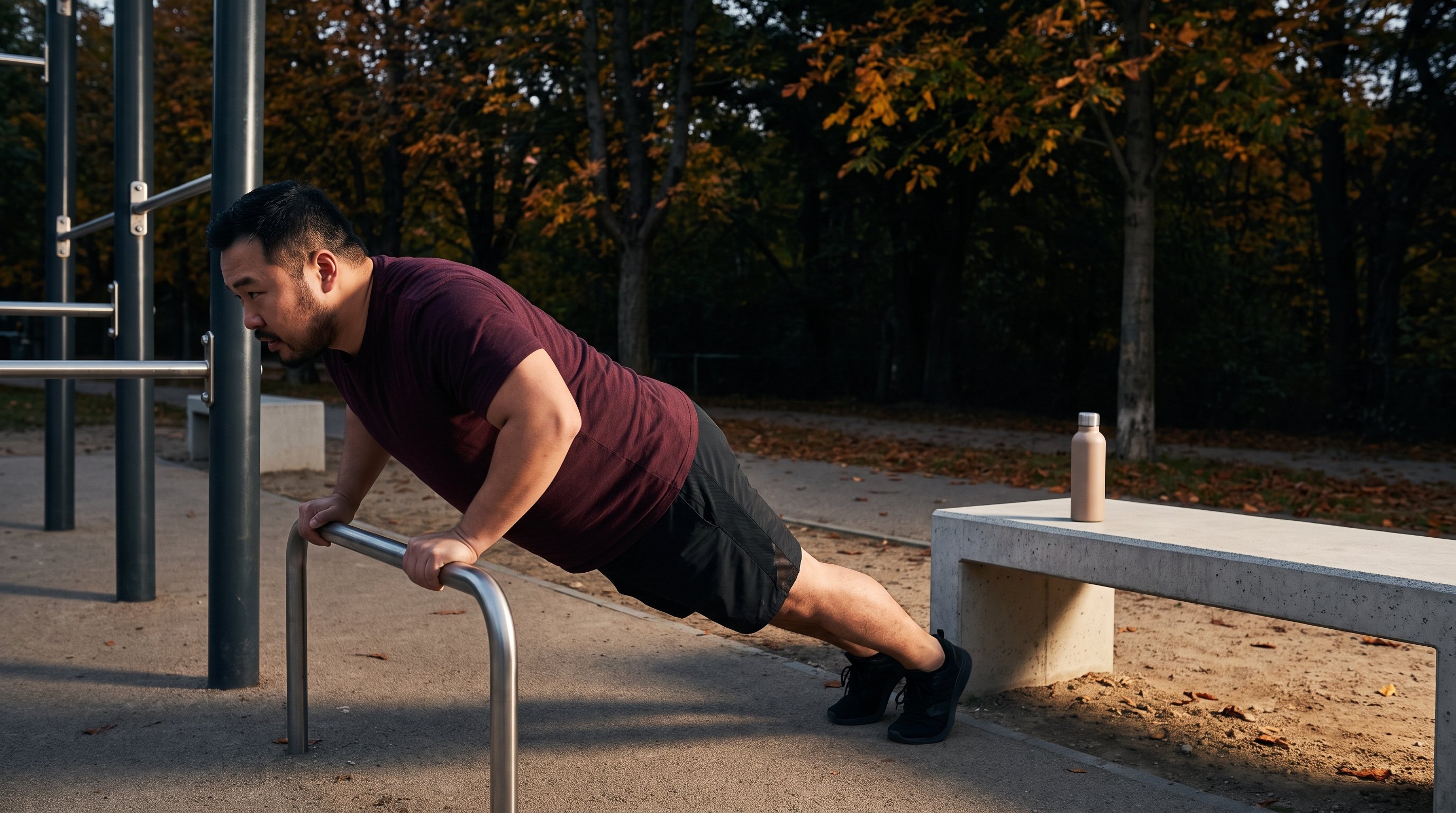
Military calisthenics means training the body with push-ups, pull-ups, squats and core work, structured the way armed forces build conditioning: short, repeatable sessions that stack over weeks. This approach has been refined over decades by military organizations worldwide, proven effective for building functional strength and endurance without equipment.
It works because it uses your own bodyweight as resistance and layers volume gradually, so the muscles and joints adapt without needing a gym full of plates. The progressive nature of bodyweight training means you can keep challenging yourself for months without hitting a plateau.
This guide covers the steps to start, how often to train, a four-week plan, common mistakes, and what to expect once you get going.
Setting Up Your Bodyweight Training Sessions
You don't need a parade ground to start. A patch of floor, some fresh air if you can get it, and a basic grasp of order is all this takes.

Getting Your First Session Right
- Pick four moves - push-ups, squats, a plank hold and either pull-ups or inverted rows cover most of the body.
- Warm up for five minutes - light jogging on the spot or arm circles gets joints ready before load goes on them.
- Work in rounds, not single sets - three rounds of each move, resting a minute between rounds, builds conditioning faster than one long set.
- Count reps you can control - stop a set when form breaks, not when your arms give out completely.
- Log what you did - even a scrap of paper with reps and rounds tells you if next week is harder or easier.
- Add a finisher - a short burst of burpees or mountain climbers at the end mimics the push these sessions are known for.
- Cool down and stretch - two minutes of stretching the chest, hips and hamstrings keeps the next session comfortable.
How Often Bodyweight Training Should Be Performed
Frequency matters more than intensity when you're starting out. Three to four sessions a week, with at least one rest day between hard ones, gives the body time to repair. This schedule balances adaptation stimulus with recovery, the foundation of any sustainable training program.
A Weekly Split That Holds Up
Spreading push, pull and leg-dominant work across the week stops any one muscle group getting hammered two days running. This prevents overuse injuries and ensures each movement pattern gets adequate recovery.

| Day | Focus |
|---|---|
| Monday | Push and core |
| Wednesday | Pull and grip |
| Friday | Legs and conditioning |
| Saturday | Full body, shorter session |
Four sessions a week is plenty for most people juggling work and life - more than that tends to erode recovery before it adds fitness.
Making Bodyweight Training Work Around Daily Life
The honest barrier isn't the exercises, it's fitting them into a week that already has a full diary.
Twenty-five minutes before a shower or during a lunch break covers a full session once the moves are familiar.
Menletics builds a military calisthenics plan around the fitness and goals you start with, so the sessions scale up as you do instead of staying stuck at week one difficulty. The app tracks your progress across sessions, adjusting difficulty based on what you actually complete rather than what a generic calendar assumes.
Pairing training with a meal plan and simple trackers for steps, water and weight keeps the rest of the day pointed the same direction as the workout.
A Four-Week Bodyweight Training Starting Plan
The order below matters more than the exact numbers - build the habit first, then add volume.
| Stage | What Changes |
|---|---|
| Week 1 | Three sessions, low reps, learn the moves |
| Week 2 | Three sessions, add one round per move |
| Week 3 | Four sessions, introduce a finisher |
| Week 4 | Four sessions, add a harder variation |
What Happens Week by Week With Consistent Training
Most people quit around the point where the new feels old and the results aren't dramatic yet.
Form usually feels steadier before strength visibly changes, and energy through the day often shifts before the mirror does. The early weeks typically show improved movement quality and reduced soreness, even if body composition hasn't shifted.
There's no fixed date for any of this - bodies and starting points differ, so judge progress by what you can do this week compared with last, not by a calendar.
Mistakes That Undo a Bodyweight Training Routine
Skipping the Warm-Up to Save Time.
Five minutes of joints moving before load goes on them prevents the kind of niggle that stalls a whole week of training.
Adding Reps Instead of Rounds.
Three solid rounds build conditioning better than one long grinding set that falls apart halfway through.
Training Hard Every Single Day.
Rest days are when the adaptation actually happens, so one or two full days off a week belongs in the plan, not outside it.
Chasing a Six-Pack Instead of the Session.
Spot reduction isn't how the body works - fat comes off all over or not at all, so the honest goal is finishing the sessions, not sculpting one area.
Ignoring Food While Training Hard.
A meal plan built around food you already like matters as much as the workout, since training alone can't outrun a diet working against it.
Structuring Military Calisthenics With Menletics
Building a routine from scratch means guessing at frequency, order and when to add difficulty - all of which Menletics takes off your plate.
Menletics turns the four-week structure above into a full progressive plan, paired with meal plans, step and water trackers, and challenges designed to keep you showing up past the first fortnight.

Get Your Personalized Plan
Burn Fat With Military Workouts
Starting Military Calisthenics This Week
The simplest start is the four moves from earlier, three rounds each, three times this week - nothing fancier than that.
Menletics exists for the weeks after that, when structure and variety start to matter more than willpower alone.
FAQ
Yes, bodyweight moves like push-ups, pull-ups and squats load muscle enough to build strength, especially as you add harder variations or more rounds. The ceiling is higher than most people assume before trying it.
The moves scale down easily - knee push-ups, assisted squats and shorter rounds make it accessible from day one. Difficulty gets added gradually, not all at once.
A few square metres of floor is enough for every move in the four-week plan above. Pull-ups need a bar, but rows using a sturdy table edge work as a substitute.
Pick the plan back up where it left off rather than starting over - missing a week doesn't erase the base already built. Menletics adjusts the plan around your fitness and goals rather than assuming everyone starts fresh.
Share this post