Military Fitness: Fitting Bodyweight Training Into Your Week
By:Author:Menletics Editorial
Updated on:September 30, 2026

- Does Military Fitness Actually Work?
- Why This Beats the Harder Alternative
- The Quantity Question: How Much, How Often
- The Practical Question: Fitting It Into a Real Week
- Comparison: Bodyweight Training Versus Gym Training
- The Forbidden Promise, Answered Honestly
- Levers That Change the Result
- How Long Until You See Results?
- Your First Four Weeks
- What Stalls Progress
- Why Menletics Works for This
- Final Thoughts
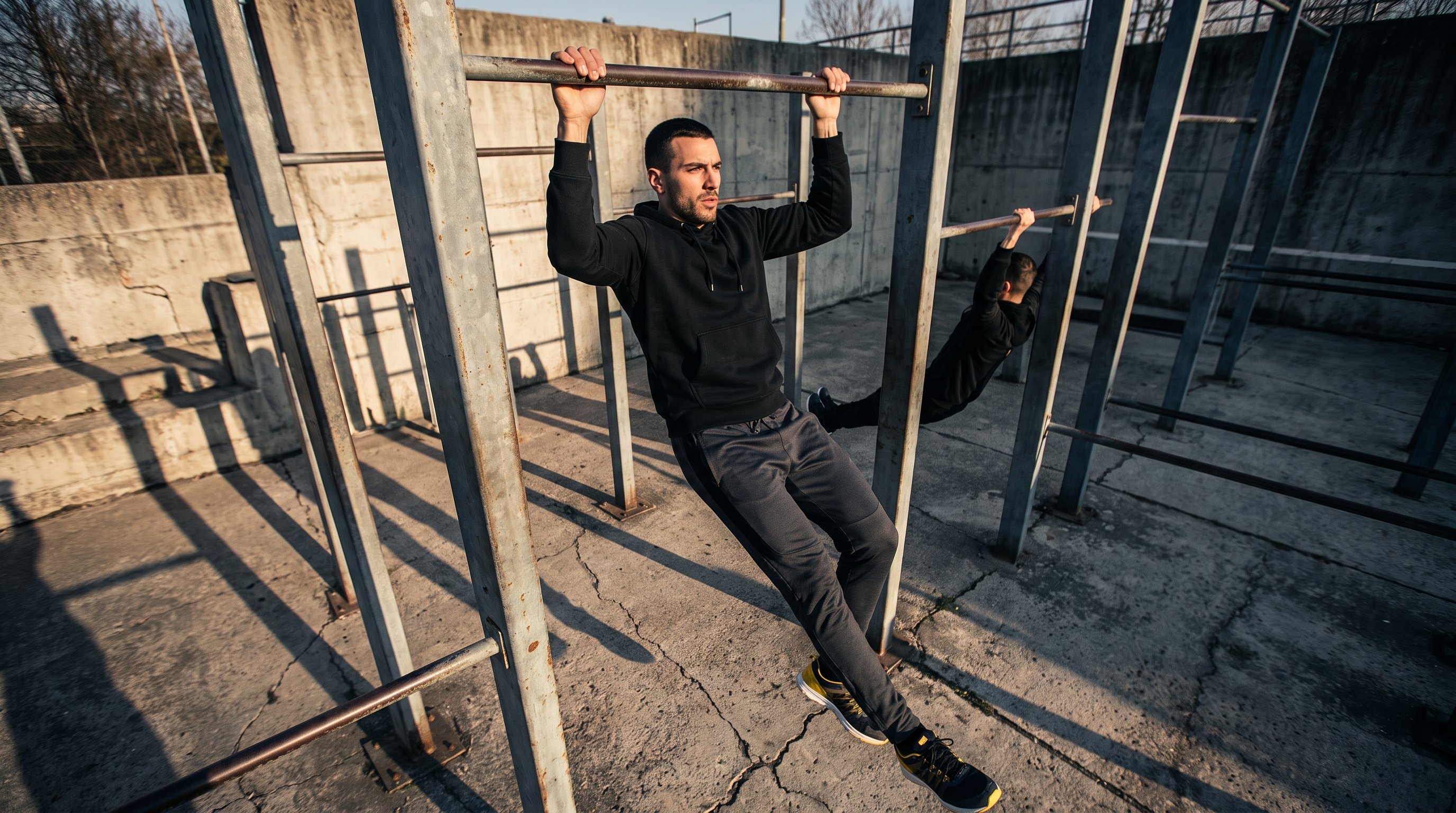
The core idea behind military fitness is simple: your own bodyweight, moved often, under a bit of structure. No barbell required, no gym membership, no 90-minute block carved out of a day that does not have one.
The mechanism is push, pull, hinge, carry and breathe hard for a while. Muscles adapt to load whether that load comes from a loaded bar or from your own frame doing push-ups, squats and holds.
This guide walks through whether the approach actually works, how much of it you need, what tends to derail people, and what a first month looks like in practice.
Does Military Fitness Actually Work?
Strip away the branding and military fitness is resistance training plus conditioning, done with bodyweight movements repeated in structured blocks.
Push-ups load your chest, shoulders and triceps. Squats load your quads and glutes. Planks and holds load your core.
Do that consistently and your body responds the way it responds to any resistance training - it gets stronger at the movements you repeat.
The Honest Arithmetic
If you do three sessions a week for four weeks, that is twelve sessions of practice at the same handful of movements.
Twelve reps of practice at anything - a push-up, a squat, a plank hold - is enough for your body to start recognising the pattern and adjusting to it.
That is not a promise of a particular look by a particular date. It is just what repetition does to a body asked to repeat something.
Why This Beats the Harder Alternative
The harder alternative is a gym membership, a commute, a changing room and a program written for someone else's schedule.
Every one of those steps is a place where a busy week can talk you out of showing up.
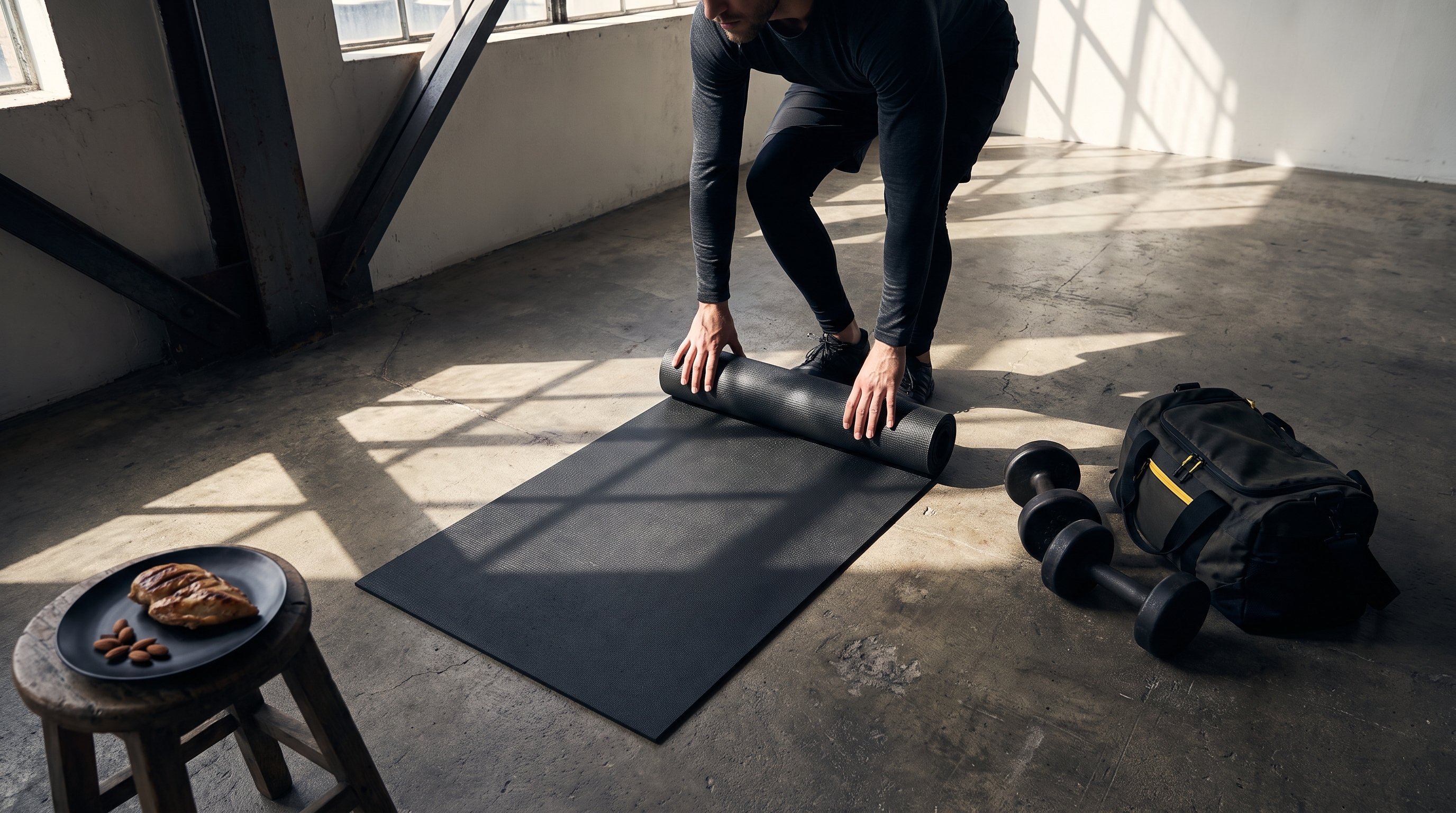
A bodyweight session at home removes most of those steps. There is no travel time, no equipment to load, no queue for a bench.
Fewer steps between deciding to train and actually training means fewer chances to talk yourself out of it. That is the whole adherence argument in one line - the easiest plan to start is usually the one you keep doing.
The Quantity Question: How Much, How Often
There is no single number that applies to every man, every schedule and every starting point.
What matters is frequency you can actually hold for weeks in a row, not a heroic single session followed by two weeks off.
Find Your Own Number
Start with a frequency that fits the week you actually have, not the week you wish you had, then add to it once it feels easy.
The table below is a starting point you can adjust up or down depending on how your first sessions feel.
| Starting Point | Frequency | Session Length |
|---|---|---|
Just starting out | 2 to 3 short sessions weekly | 5 to 10 minutes |
Building a habit | 3 to 4 sessions weekly | 10 to 15 minutes |
Established routine | 4 to 5 sessions weekly | 15 to 20 minutes |
The Practical Question: Fitting It Into a Real Week
Knowing how much to do is one thing. Actually opening a plan, picking the right session and tracking whether you did it is another.
That gap between intention and action is where most home training plans quietly die.
Menletics closes that gap with a progressive military calisthenics workout plan tailored to your fitness and goals, so the decision of what to do today is already made for you.
Add step, water, weight and fasting trackers in the same place, and you can see whether the week actually happened instead of guessing.
Comparison: Bodyweight Training Versus Gym Training
The decision most men are actually weighing is not whether to get fitter - it is which format they will still be doing in three months.
| Factor | Bodyweight At Home | Gym Training |
|---|---|---|
Setup time | None, start immediately | Travel plus changing |
Equipment needed | Bodyweight only | Machines and weights |
Session length | 5 to 20 minutes | 45 to 90 minutes |
Schedule flexibility | Any time, any room | Fixed opening hours |
Cost | No membership required | Monthly membership fee |
The Forbidden Promise, Answered Honestly
No plan, military-style or otherwise, can target where fat comes off your body. Your body decides that order on its own, and no amount of core work changes the sequence.
There is also no overnight version of this. A single tough session will not undo months of a different routine by the next morning.
The real answer is unglamorous: consistent training plus a food intake that supports a deficit, held for long enough that your body has time to respond.
That is the whole mechanism. No shortcut sits underneath it.
Levers That Change the Result
Three factors do most of the work here, and they are worth ranking because effort spent on the wrong one is effort wasted.
The Three Levers, Strongest First
- Consistency of sessions - three shorter sessions done every week beat one long session done occasionally, because your body adapts to repeated signals, not sporadic ones.
- What you eat around training - a food intake that holds a modest deficit is what lets the muscle you build actually show, since training builds the tissue but intake decides what's visible over it.
- Sleep and recovery - the adaptation your muscles make happens between sessions, not during them, so skipping recovery blunts the return on every session you did put in.
How Long Until You See Results?
This is where most people quit - the first few weeks, when the mirror has not caught up with the effort yet.
Strength and movement quality tend to shift before appearance does, since your nervous system gets efficient at a movement before your body composition visibly changes.
Stay vague about the calendar and specific about the behaviour: show up for the sessions, hold the food intake, and let the timeline be what it is rather than what you hoped.
Your First Four Weeks
The order of these weeks matters more than the exact numbers in them - build the habit before you build the intensity.

| Week | Focus | Goal |
|---|---|---|
Week 1 | Learn the movements | Show up, not perform |
Week 2 | Add one extra session | Build the weekly rhythm |
Week 3 | Increase reps or hold time | Test the new baseline |
Week 4 | Repeat and track progress | Confirm the habit is holding |
What Stalls Progress
Starting Too Hard, Too Fast
A brutal first week that leaves you sore for five days usually ends in a missed week two. Pick a session you could repeat tomorrow, not just survive today.
Treating Food As Separate From Training
Sessions build the tissue, but food intake decides whether progress is visible. Adjust what you eat around your training rather than ignoring it.
No Way to See the Week
Without a record, a missed session quietly turns into a missed month. Track sessions somewhere you actually look at.
Chasing a Look Instead of a Habit
Checking the mirror daily hides the trend in the noise. Judge progress by whether the sessions happened, not by how one morning looks.
Skipping Recovery Entirely
Training every single day with no rest blunts the adaptation your body is trying to make. Build in rest days on purpose, not by accident.
Why Menletics Works for This
Everything above points to the same conclusion: the plan that survives a real week is the one with the fewest excuses to skip it.
Menletics is built around that idea - a progressive military calisthenics workout plan tailored to your fitness and goals, paired with a meal plan built around over 1000 easy-to-follow recipes so food stops being the part you have to figure out alone.
Add step counters, water intake, weight and fasting trackers in one place, plus challenges designed to keep you consistent, and the whole first-month problem above - showing up, eating around it, seeing the week - gets handled inside one app.
Final Thoughts
None of this needs to be complicated: pick a frequency you can actually hold, do the same handful of movements often, and let the food intake around it do its share of the work.
If you want that structure already built rather than assembled from scratch, Menletics is one way to start the first week without having to plan it yourself.
FAQ
No - the whole point of the bodyweight approach is that push-ups, squats and holds use your own frame as the resistance. A yoga mat helps for floor work but is not required.
Bodyweight movements scale by changing reps, tempo or hold time, so the difficulty grows with you rather than staying fixed. The load is adjustable even without added weight.
Start with the shortest end of the range and let the session grow once it feels manageable. A short session done consistently beats a long one you keep postponing.
That drop is normal and it is exactly why tracking and structure matter more than willpower at that point. Menletics keeps the plan and the record in one place so you are not relying on motivation alone to decide what to do next.
Share this post