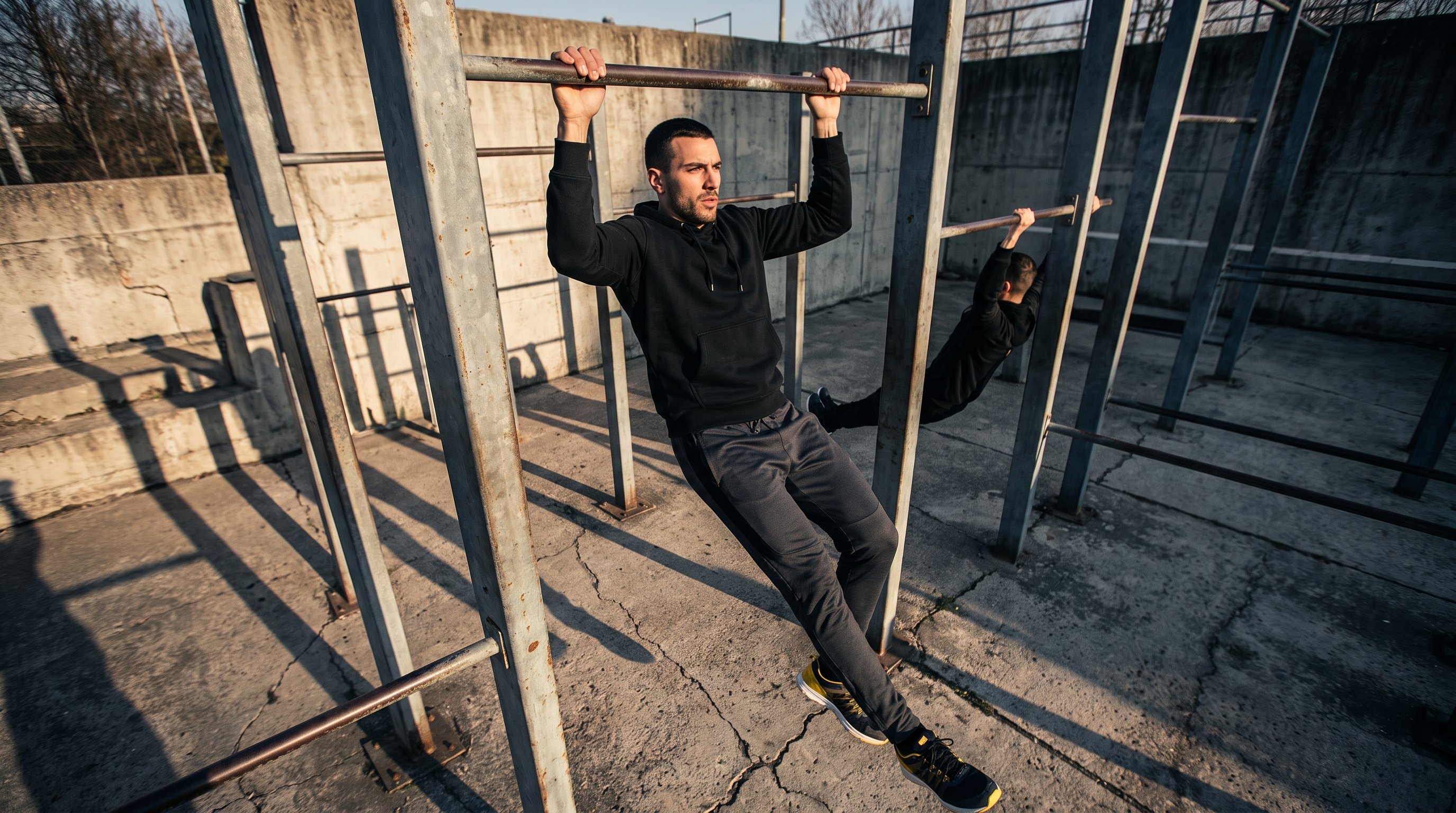
Military Workout: The Honest Guide To Bodyweight Training
By:Author:Menletics Editorial
Updated on:September 30, 2026

- Does a Military Workout Actually Work?
- Why This Beats the Harder Alternative
- The Quantity Question: How Much, How Often
- The Practical Question: Where Do You Actually Start?
- Comparison: Bodyweight Training Versus the Gym Route
- The Forbidden Promise, Answered Honestly
- Levers That Change the Result
- How Long Until You See Results?
- Your First Four Weeks
- What Stalls Progress
- Why Menletics Works for This
- Final Thoughts
A push-up, a squat and a plank cost nothing and need no gym. That's the whole appeal of this style of training - three or four moves, done with intent, repeated often enough to matter.
The mechanism is simple. You load a muscle with your own bodyweight, you push it a little further than last time, and the body adapts by getting stronger and more efficient at using energy.
This guide covers whether the approach works, how much you actually need to do, what stalls people, and what a realistic first month looks like.
Does a Military Workout Actually Work?
Bodyweight training works the same way any resistance training works: you put a muscle under tension, it gets a small amount of damage, and it repairs slightly stronger than before.
Do that across weeks and the small repairs add up to visible strength and better muscle tone.
The Arithmetic Behind It
Say you do 10 minutes of bodyweight moves, 5 days a week. That's 50 minutes a week, roughly 3,600 minutes a year - which is a lot of repeated tension on the same muscles, done consistently rather than in occasional long bursts.
None of this changes where fat comes off your body - that's decided by genetics, not by which exercise you choose. What changes is how strong and capable you feel doing everyday things.
Why This Beats the Harder Alternative
The hardest workout plan on paper is worthless if it never gets done.
A 5-minute or 10-minute bodyweight session has one job: get finished. It removes the excuses that kill long gym-based routines - travel time, equipment, changing rooms, scheduling around opening hours.

Something short and repeatable, done most days, beats something long and demanding that only happens twice before it's abandoned.
This is the adherence argument in plain terms: the best plan is the one you're still doing in month three.
The Quantity Question: How Much, How Often
There's no single correct number of reps or minutes - what matters is a dose you can repeat without dreading it.
A useful starting range is short daily or near-daily sessions rather than one long weekly effort, because frequency builds the habit faster than duration does.
Find Your Own Number
Start with whatever length you know you'll actually finish - even if that's 5 minutes - and only add time once that number feels easy.
| Starting Point | Session Length | Frequency |
|---|---|---|
Just starting | 5 minutes | 4-5 days a week |
Building consistency | 10 minutes | 5-6 days a week |
Comfortable with basics | 15-20 minutes | 5-6 days a week |
The Practical Question: Where Do You Actually Start?
Knowing you should train is easy. Knowing which moves to do, in what order, and how to progress them without a coach standing next to you is the actual barrier.
This is where a structured plan earns its keep - it removes the guesswork of what to do today versus tomorrow.
Menletics builds a progressive bodyweight plan tailored to your starting fitness and goals, so each session has a clear job instead of leaving you guessing what comes next.
Comparison: Bodyweight Training Versus the Gym Route
Most men aren't choosing between doing something and doing nothing - they're choosing between two real options, and the right one is the one that fits the week they actually have.
| Factor | Bodyweight Training | Gym Route |
|---|---|---|
Time needed | 5-20 minutes | 60-90 minutes with travel |
Equipment | None required | Machines and weights |
Cost | No membership | Monthly membership fee |
Where it happens | Home or anywhere | Fixed location only |
Barrier to starting | Very low | Higher, more planning |
The Forbidden Promise, Answered Honestly
No workout burns fat from one specific area, and nobody honest will tell you a set of squats will slim down just your midsection.
Fat loss happens across the whole body, in an order decided by your own biology, not by which exercise you picked.
There's no overnight version of this either - what's real is a body that gets steadily stronger and more capable the longer you stay consistent.
Levers That Change the Result
Three things move the needle more than anything else, and they're in order of impact.
What Actually Moves the Needle
- Consistency over intensity - showing up most days at moderate effort beats one brutal session followed by four missed days
- Progressive overload - adding a rep, a round, or a harder variation once the current version feels manageable
- Food that supports the deficit - training creates the demand, but what you eat decides whether that demand gets met
How Long Until You See Results?
This is where most people quit - the point where effort feels invisible and nothing on the outside has changed yet.
Strength and endurance tend to show up before visible changes do, because the nervous system adapts to movement patterns early.

Be patient with the timeline rather than judging week two against week twelve - the honest answer is that it takes as long as it takes, and quitting early guarantees it takes forever.
Your First Four Weeks
The order of these weeks matters more than the exact numbers - build the habit before you build the difficulty.
| Week | Focus | Goal |
|---|---|---|
Week 1 | Learn the moves | Finish every session |
Week 2 | Build the routine | Same time, same place |
Week 3 | Small progression | One extra rep or round |
Week 4 | Add consistency check | Review what's working |
What Stalls Progress
Starting Too Hard, Too Fast
Going from nothing to a 40-minute daily routine usually ends in burnout by week two - scale it back to something you can repeat without dread.
Skipping Food Entirely
Training without any attention to what you eat leaves half the equation unmanaged - simple, repeatable meals matter as much as the reps.
No Way to See Progress
If nothing is tracked, small wins go unnoticed and motivation fades - even a basic log of reps or weight helps you see the trend.
Treating Rest As Optional
Muscles adapt during recovery, not during the workout itself - skipping rest days slows the very progress you're chasing.
Comparing Week Two to Someone Else's Year Three
Measuring your early weeks against someone further along just breeds frustration - the only useful comparison is you against your own last month.
Why Menletics Works for This
Menletics takes the guesswork out of the equation by pairing a progressive bodyweight plan with a meal plan built around food you already like.
It keeps steps, water and weight in one place so progress is visible instead of assumed, and it adds challenges designed to keep you showing up on the days motivation is low.
Final Thoughts
None of this needs to be complicated - a few short sessions a week, food that supports the effort, and enough patience to let the process work.
If the plan feels too vague to start today, Menletics gives it structure so the only decision left is showing up.
FAQ
No - bodyweight moves like push-ups, squats and planks need nothing but floor space. That's the entire point of this style of training.
A short session done consistently beats a long one done rarely, because the muscle adaptation comes from repeated tension over weeks, not from any single hard day. Intensity can rise gradually once the habit is set.
That's the main barrier for most people starting out, and it's solved by following a structured plan instead of guessing. Menletics builds that plan around your current fitness so each session has a clear next step.
That's usually when effort feels invisible because visible change hasn't caught up yet. Sticking through that stretch is the difference between people who see it through and people who stop just before it starts showing.
Share this post