Budget Meal Prep for Men: What to Cook to Beat Daily Takeaways
By:Author:Menletics Editorial
Updated on:September 30, 2026
- Does Budget Meal Prep Actually Work?
- Why This Beats the Harder Alternative
- The Quantity Question: How Much, How Often
- The Practical Question: What Do You Actually Cook
- Comparison: Budget Meal Prep vs Buying Lunch Daily
- The Forbidden Promise, Answered Honestly
- Levers That Change the Result
- How Long Until You See Results?
- Your First Four Weeks
- What Stalls Progress
- Why Menletics Works for This
- Final Thoughts
A week of home-cooked lunches can cost less than two takeaway meals, and that gap is the whole case for budget meal prep for men who are short on time and cash.
The mechanism is simple: buying ingredients in bulk and cooking them once spreads the cost and the effort across five or six meals instead of one.
This guide covers whether the maths actually works, how much to cook, what to buy, and the four-week routine that turns budget meal prep into a habit rather than a chore.
Does Budget Meal Prep Actually Work?
The mechanism behind budget meal prep is buying power. A large bag of rice, a tray of chicken thighs and a box of frozen vegetables cost less per portion than the same ingredients bought in single servings.
Cooking one big batch also uses one set of ingredients, one gas bill and one hour, rather than repeating that setup five times a week.
Here's the honest arithmetic: if a takeaway lunch runs somewhere around £6 to £9 and a home-cooked batch meal costs a fraction of that per portion once split across a week, the saving compounds fast simply by repeating the habit.
None of this needs a special ingredient or a strict diet. It just needs the shopping list and the cooking session to happen on the same day, every week.
Why This Beats the Harder Alternative
The harder alternative is deciding what to eat from scratch every single day, then shopping for it, then cooking it, then cleaning up. Repeat that seven times a week and it's no wonder it falls apart by Wednesday.
Budget meal prep removes most of those decisions in one sitting. You shop once, cook once, and the rest of the week runs on autopilot.

That matters because the plan that survives a busy week is rarely the most precise one. It's the one that asks the least of you when you're tired.
Fewer decisions per day is the whole advantage. Adherence beats optimisation, every time the week gets messy.
The Quantity Question: How Much, How Often
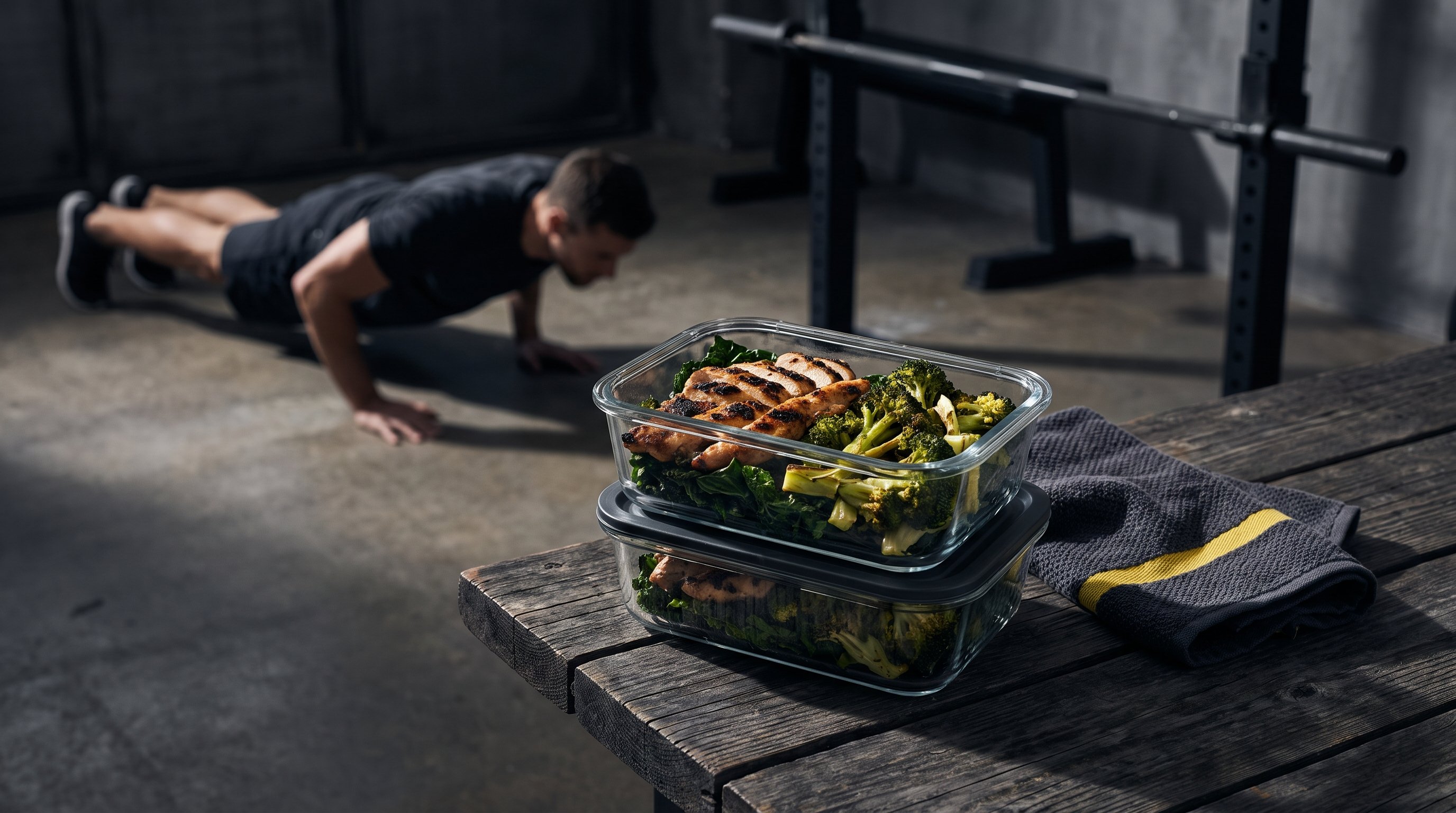
Most budget meal prep runs on a batch of protein, a batch of carbs and a batch of vegetables, cooked once and split into containers for the days ahead.
How many portions you make depends on how many meals you're actually replacing - lunches only, or lunches and dinners too.
Find Your Own Number
Start by counting the meals you currently buy or skip in a normal week, then prep exactly that many portions - no more, no less, until you know your appetite and your fridge space.
| Goal | Portions | Frequency |
|---|---|---|
Lunches only | 5 per week | Cook once |
Lunches and dinners | 10 per week | Cook once, split batches |
Solo meal prep | 5-7 per week | One session |
Prepping with a partner | 10-14 per week | One or two sessions |
The Practical Question: What Do You Actually Cook
The practical answer is to pick one protein, one carb and one vegetable that cook well in bulk, then rotate the seasoning so it doesn't feel like the same meal five days running.
Chicken thighs, rice or potatoes, and a frozen vegetable mix are a common starting trio because they're cheap per kilogram and hold up well in the fridge.
Deciding what to cook each week is easier with a meal plan built around food you already like, rather than a list of unfamiliar ingredients you'll only use once.
Menletics includes a meal plan with over 1000 recipes, which gives you options to rotate through without repeating the same three meals every single week.
Pair that with the app's progress tracking, so the food side and the movement side of the week live in one place instead of two separate habits fighting for your attention.
Comparison: Budget Meal Prep vs Buying Lunch Daily
The decision most men are actually weighing isn't diet plan A versus diet plan B. It's cooking once a week versus buying lunch on the way to work every single day.
| Factor | Meal Prep | Daily Buying |
|---|---|---|
Cost per meal | Lower, bought in bulk | Higher, single portions |
Time per week | One session | Daily decision each time |
Protein control | Set by you | Set by the seller |
Variety | Depends on rotation | Wide but inconsistent |
Consistency | High once habit forms | Drops when busy |
The Forbidden Promise, Answered Honestly
No meal, no matter how carefully prepped, targets fat on one part of the body. The body doesn't work that way, and no batch of chicken and rice changes that.
Budget meal prep also won't produce results overnight, and it won't cure or reverse anything - it's food, not medicine.
What it does do is make it easier to eat a consistent amount of food, which is the actual lever behind most changes in body composition over time.
Consistency is unglamorous and it wins anyway. That's the real promise, and it's a smaller one, but it's the one that holds up.
Levers That Change the Result
Three things move the needle more than any single recipe or ingredient swap.
What Actually Moves the Needle
- Buying in bulk - the biggest single saving in budget meal prep, since cost per portion drops as pack size goes up
- Cooking once a week - protects the habit from busy days, because the hard work is already done before the week gets chaotic
- Portioning by eye or by container - keeps meals consistent in size, which matters more than any single ingredient choice
How Long Until You See Results?
Most men give up on a new habit somewhere around the second or third week, right when it stops feeling new and starts feeling routine.
That's actually the point where budget meal prep starts paying off, because the shopping list gets shorter to plan and the cooking gets faster with practice.
Expect the process to get easier before it gets dramatically cheaper. Timing varies by person, kitchen and schedule, so it's worth judging progress by how automatic the habit feels rather than by a fixed date.
Your First Four Weeks
The order of these steps matters more than the exact recipes you choose.

| Week | Focus |
|---|---|
Week 1 | Pick one protein, one carb, one vegetable |
Week 2 | Add one new recipe to the rotation |
Week 3 | Adjust portion sizes to actual appetite |
Week 4 | Batch two proteins for more variety |
What Stalls Progress
Buying Too Much Variety Too Soon
A long shopping list with ten different ingredients gets expensive fast and half of it goes off before it's used. Start with three or four staples and expand slowly once the habit sticks.
Skipping the Shopping List
Walking into a shop without a list leads to impulse buys that blow the budget before you've picked a protein. Write the list from the recipes, not the other way round.
Cooking Without a Container Plan
Food cooked without a clear portioning plan tends to get eaten in one sitting instead of split across the week. Portion straight into containers as soon as it's cooked, not after it's already on a plate.
Treating Every Week As Identical
Repeating the exact same meal for a month gets boring fast, and boredom is what breaks the habit. Rotate one ingredient or sauce each week to keep it interesting without adding much cost.
No Tracking of What's Actually Being Eaten
Without any record, it's easy to lose track of portions and drift back to old habits. Keeping food, water and weight in one place makes it obvious when something's slipping.
Why Menletics Works for This
Budget meal prep works best when it's paired with a routine that doesn't ask for hours you don't have, and that's exactly where Menletics fits.
The meal plan gives you over 1000 recipes to rotate through, so budget cooking never feels repetitive, while the metabolism-boosting tips and nutrition guides help you make smarter swaps without overhauling your whole kitchen.
Pair that with the progressive military calisthenics workouts and the step, water and weight trackers, and the food side of the week stops being a separate project from the fitness side.
Final Thoughts
Budget meal prep for men isn't complicated - it's a shopping list, one cooking session and a set of containers, repeated weekly until it feels automatic.
Pick one protein, one carb and one vegetable this week, cook it once, and let Menletics handle the recipe rotation and tracking so the habit has room to stick.
FAQ
It depends on what you're replacing, but cooking a batch of chicken, rice and vegetables tends to cost less per portion than buying single lunches daily. The saving comes from bulk buying and cooking once rather than repeating the process every day.
It can be if the rotation never changes, but swapping the sauce, spice or vegetable each week keeps it interesting without raising the cost much. Variety is a planning choice, not a budget problem.
Even a single hour on a weekend covers most of the week's lunches if the recipe is simple enough. Start with one meal type prepped in bulk before trying to prep every meal.
Boredom and an overloaded shopping list are the two most common reasons the habit fades. Menletics helps by rotating recipes automatically and tracking progress, so the routine has less chance to go stale.
Share this post