Healthy Eating For Men: A Guide That Actually Fits Real Life
By:Author:Menletics Editorial
Updated on:October 28, 2026

- Does Healthy Eating Have to Mean Strict Rules
- The Two Parts of Eating Well As a Man
- How Much a Realistic Eating Day Looks Like
- Why Flexible Meals Beat a Locked Down Diet
- Making Healthy Eating Work Around a Full Week
- The Myth of a Perfect Diet That Fixes Everything
- What Actually Changes the Result Long Term
- Mistakes That Quietly Undo Healthy Eating for Men
- Building Healthy Eating for Men With Menletics
- Keeping Healthy Eating Going Past the First Month
Healthy eating for men comes down to one thing: eating in a way that's easy to repeat most days, not a perfect way to eat for a few weeks.
The body doesn't care about willpower. It responds to what gets eaten consistently, week after week, which is why flexible patterns tend to outlast rigid ones.
This guide covers how eating patterns actually work, how much food a realistic day involves, why the easier route beats the stricter one, and the mistakes that quietly derail most men within a month.
Does Healthy Eating Have to Mean Strict Rules
No. The mechanism behind healthy eating is simple: the body uses energy from food, and what's left over after activity gets stored or used for repair and growth.
Eat roughly in line with what gets used and the numbers work themselves out over time, no strict rule required.
Say a man eats around 2,400 calories most days and burns close to that through daily activity and training. Nothing dramatic happens, good or bad, because the numbers are roughly balanced - that's the honest arithmetic behind most "healthy eating" advice.
The food choices matter for how full and energised he feels, not for some hidden rule that only certain foods are allowed.
The Two Parts of Eating Well As a Man
Getting Enough Protein and Fibre
Protein and fibre both help with feeling satisfied after a meal, which makes it easier to stop eating when actually full rather than when the plate is empty.
Meals built around a protein source and some vegetables or whole grains tend to hold hunger off longer than meals built mostly around refined carbs alone.
Matching Food to Activity Level
A desk-based day and a training day don't need identical meals, because the body is asking for different amounts of fuel on each one.
Shifting portions up slightly on harder training days and down slightly on rest days is a small adjustment that keeps the whole week balanced without any tracking app required.
How Much a Realistic Eating Day Looks Like
There's no single number that fits every man, but a realistic day has a shape worth copying even before the exact amounts get tailored.
Building a Day Around Three Main Meals
Three solid meals with a protein source at each one tends to be easier to stick to than six small meals that require constant planning.

The table below is a starting shape for a realistic day, not a prescription - portions should flex with size, activity and hunger.
| Meal | Focus | Example |
|---|---|---|
| Breakfast | Protein plus slow carbs | Eggs, oats, fruit |
| Lunch | Protein plus vegetables | Chicken, rice, salad |
| Dinner | Protein plus fibre | Fish, potatoes, greens |
| Snack | Something filling | Yoghurt, nuts, fruit |
| Water | Spread across the day | 2 to 3 litres |
Why Flexible Meals Beat a Locked Down Diet
A locked down diet with a fixed list of allowed foods looks disciplined on paper, but it tends to break the first time life gets busy or a meal out happens.
Flexible eating - where a man swaps foods within a pattern instead of banning entire categories - survives those disruptions because there's no single rule being broken.
Someone can eat flexibly for months without much friction, where someone on a rigid plan often lasts weeks before the all-or-nothing thinking kicks in after one off day.
Adherence, not perfection, is what actually produces results over time.
Making Healthy Eating Work Around a Full Week
Work, travel, family time and training all compete for the same hours, so any eating pattern that only works on a calm week isn't much use.
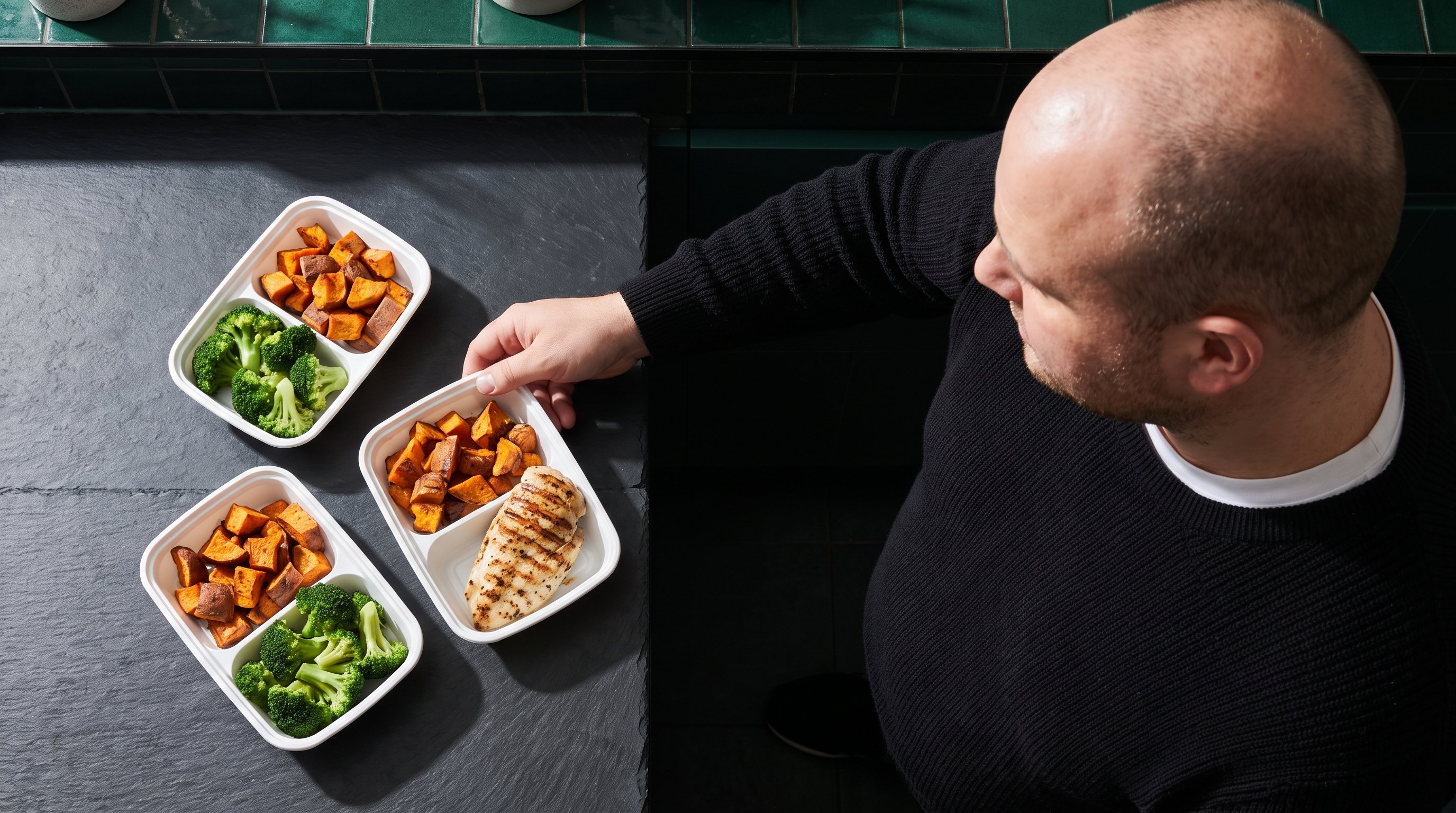
Batch-cooking a few proteins and carb sources at the start of the week removes most of the daily decision-making, which is often where healthy eating quietly falls apart.
This is where a meal plan built around food already liked earns its place - it removes the guesswork of what to cook without asking for a complete diet overhaul.
Menletics includes recipes designed to fit around a working week rather than demanding hours in the kitchen, alongside trackers for water, weight and steps so the whole picture stays in one place.
The Myth of a Perfect Diet That Fixes Everything
No single food or meal plan fixes health on its own, and no diet targets one part of the body over another.
Spot reduction doesn't exist - eating well supports the whole body, not a specific area, no matter what a meal plan promises.
The real answer is less exciting but more honest: steady habits held for a long stretch of time matter more than any single "perfect" diet ever could.
That's not a letdown, it's actually good news, because it means there's no secret combination to chase.
What Actually Changes the Result Long Term
A few factors matter far more than any specific food choice, and they tend to explain most of the difference between men who stick with healthy eating and those who don't.
The Factors That Matter Most
- Consistency over weeks, not days - a pattern repeated for months outperforms a perfect single week every time.
- How well the plan fits the actual week - a plan that ignores work hours or training days gets abandoned fast.
- How satisfying the meals feel - meals that leave a man hungry an hour later rarely survive past week two.
Mistakes That Quietly Undo Healthy Eating for Men
Cutting Out Entire Food Groups
Removing carbs or fats completely usually backfires because it makes meals harder to plan and less satisfying, which pushes toward quitting sooner.
Keeping a variety of foods on the plate is usually easier to sustain than cutting anything out completely.
Skipping Meals to Save Calories
Skipping breakfast or lunch to "save up" for dinner often leads to overeating later, undoing the intended saving anyway.
Spreading food across the day tends to keep hunger and energy more level.

Ignoring Drinks and Liquid Calories
Sugary drinks and extra alcohol add up fast and rarely get counted as part of "eating" at all.
Swapping some of these for water or lower-calorie options is a small, repeatable change.
Treating One Bad Day As a Failed Week
One big meal or missed workout doesn't undo days of steady eating, but treating it that way often leads to giving up entirely.
The next meal is always the easiest place to get back on track.
Building Healthy Eating for Men With Menletics
None of this requires figuring everything out alone or starting from a blank page.
Menletics puts a tailored meal plan, recipe options, and daily trackers for water, weight and steps in one place, so healthy eating stops being a guessing game and starts being something a man can just follow.
The training side - a progressive military calisthenics plan built around someone's actual goals - works alongside the eating side, so neither one is left to chance.

Get Your Personalized Plan
Burn Fat With Military Workouts
Keeping Healthy Eating Going Past the First Month
The first month of any new eating pattern is usually the easiest, because motivation is still high and the routine still feels fresh.
The real test is month two and three, when the plan has to survive a bad week at work, a holiday, or simply boredom with the same meals.
One concrete action worth taking today: pick three meals that are easy to repeat and build the rest of the week loosely around them, rather than planning every meal from scratch.
Menletics is built to support exactly that kind of repeatable routine, with meal options and tracking that stay useful long after the first few weeks.
FAQ
Energy and digestion often feel different within a couple of weeks of more consistent meals, though the timing varies by person. Visible changes in weight or body composition take longer and depend on consistency over time, not any single meal.
No, occasional takeaways fit into a flexible pattern without undoing the rest of the week. The issue is frequency and portion, not the existence of any one food.
Batch-cooking two or three simple meals at the start of the week covers most of that gap without daily effort. Menletics includes recipes designed to be quick to prepare for exactly this reason.
Usually because the plan was too strict to begin with, and one off day turned into giving up entirely. A flexible pattern built around real meals tends to survive those bumps far better than a rigid list of allowed foods.
Share this post