No Equipment Workout Men: The Honest Guide To Training Bare-Handed
By:Author:Menletics Editorial
Updated on:October 28, 2026
- Can Training With No Equipment Really Build Results
- Bodyweight Training at Home Versus a Gym Membership
- Why the Bare-Handed Route Wins on Adherence
- Who No Equipment Training Suits and How to Adjust It
- Making a No Equipment Routine Fit a Working Week
- The Myth of Spot-Reducing Fat With Bodyweight Moves
- Building a Menletics Plan Around No Equipment Training
- Starting Your No Equipment Routine Tonight
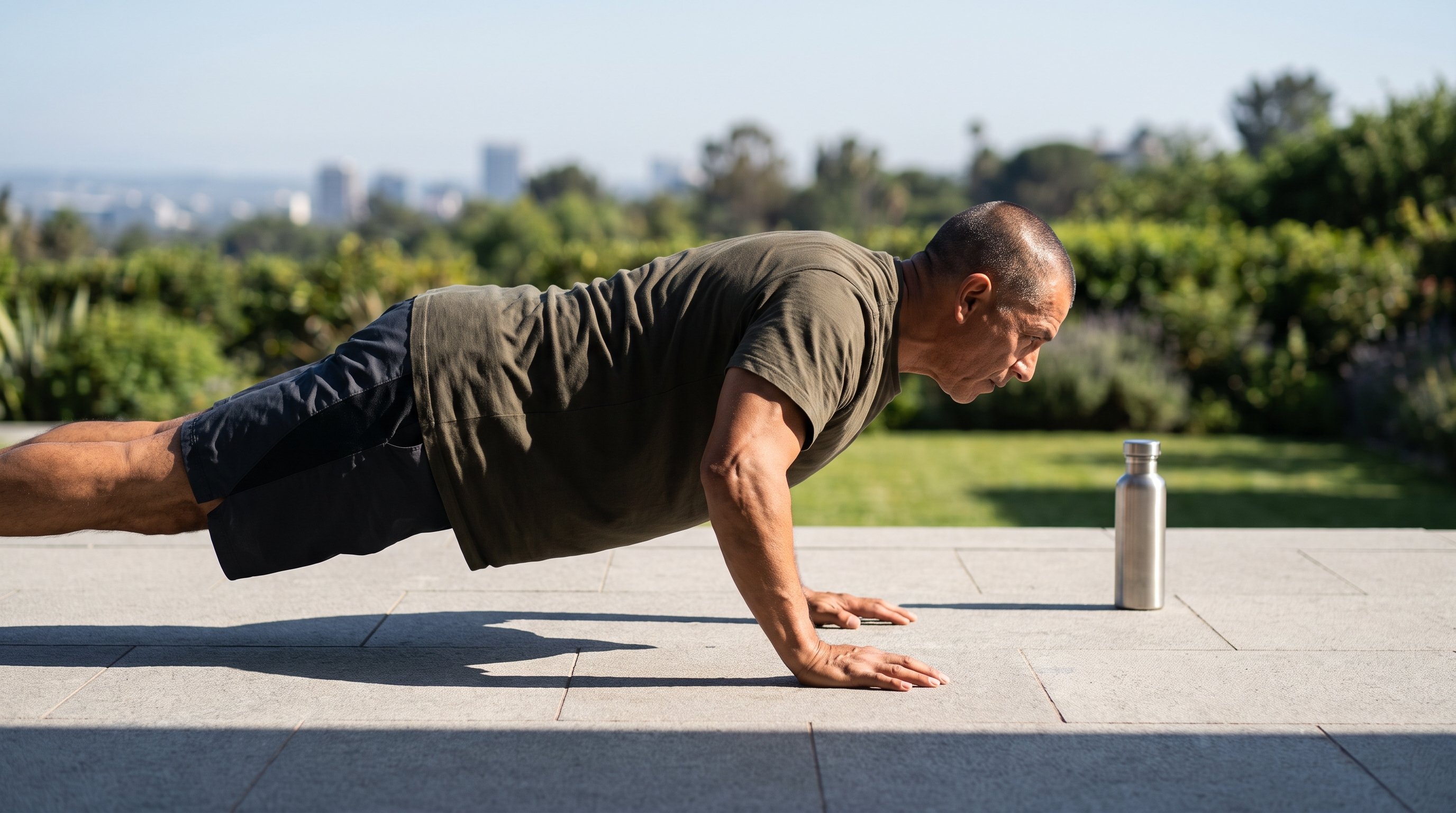
A no equipment workout works for men because muscle responds to load and effort, not to the brand name on a machine.
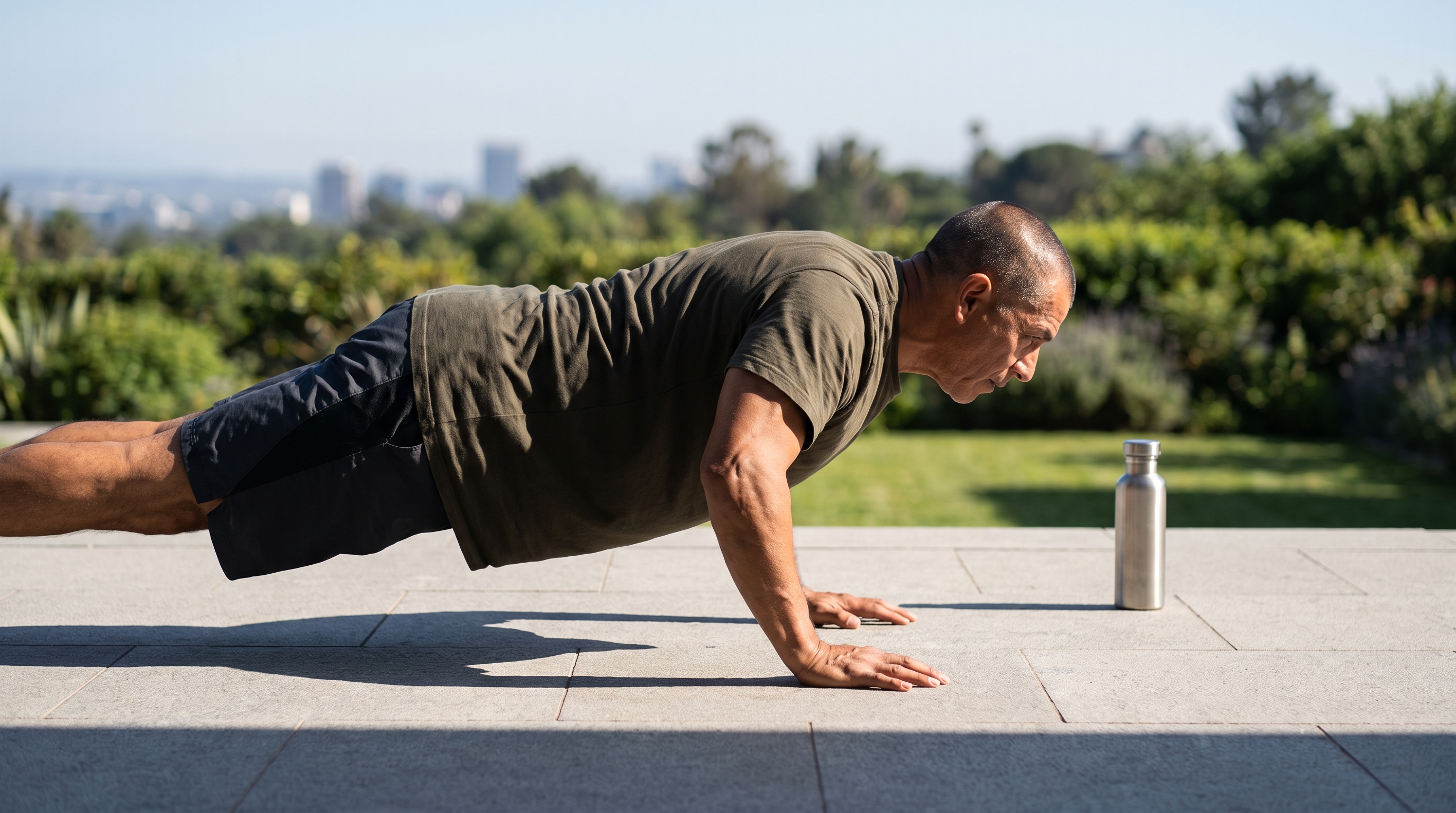
Push-ups, squats, lunges and planks put your own bodyweight against gravity, and gravity does not care whether you paid for a gym membership.
This guide covers whether bare-handed training really works, how it stacks up against a gym plan, who it suits, and how to build a week you can repeat without burning out.
Can Training With No Equipment Really Build Results
Muscle grows when it's asked to do more than it's used to, whether that extra demand comes from a dumbbell or from the angle of your own body.
A slow push-up with your feet raised is harder than a fast one with your knees down, and that's the whole trick of bodyweight training - you change the lever, not the load.
Here's the arithmetic. Say you start at eight push-ups and add one rep most sessions across a month - that's roughly four sessions a week for four weeks, which is sixteen sessions.
Sixteen small additions on top of eight reps gets you into the mid-twenties for a single set, without touching a weight rack.
That's not a promise about your own numbers - fitness levels and starting points differ - but it shows the mechanism is real and it compounds the same way lifting weights does.
Bodyweight Training at Home Versus a Gym Membership
The decision most men actually face isn't about which exercise is superior - it's about which one you'll still be doing in three months.
A gym membership brings machines and a wider range of load, but it also brings travel time, opening hours and a monthly direct debit.
No equipment training removes most of the friction, at the cost of a ceiling on how heavy you can eventually go.
| Factor | Gym Membership | No Equipment |
|---|---|---|
| Setup time | Travel plus changing | Walk to the floor |
| Cost | Monthly membership fee | No ongoing cost |
| Load ceiling | High, heavy machines | Limited by bodyweight |
| Flexibility | Fixed opening hours | Any time of day |
| Consistency risk | Drops on busy weeks | Easier to repeat |
Neither column is wrong, but for most men the version that fits around work and family wins simply by getting used more often.
Why the Bare-Handed Route Wins on Adherence
A harder plan that gets skipped twice a week loses to an easier plan that gets done every time.
Heavy barbell training can build strength quickly, but it needs a rack, plates and usually a drive somewhere, and all three are places a plan can quietly fall apart.
A no equipment session removes two of those three barriers - there's no travel and no waiting for a machine to free up.
Fewer barriers means more sessions get finished, and more finished sessions is what actually moves the needle over months, not the theoretical ceiling of either method.
Who No Equipment Training Suits and How to Adjust It
The Complete Beginner
Start with the easiest version of each move - knee push-ups, assisted squats using a wall for balance - and focus on finishing the session rather than chasing numbers.
The Time-Poor Professional
Shrink the session to fifteen minutes and stack three or four exercises back to back with short rests, since frequency matters more than length when time is the limit.
The Older Trainee
Lean on controlled tempo and full range of motion rather than speed, and give joints an extra day of rest between sessions if things feel stiff.
The Returning Exerciser
Drop back to half the reps you remember doing before and rebuild from there, because the body loses conditioning faster than it loses memory of how hard it used to push.
Making a No Equipment Routine Fit a Working Week
A no equipment plan only pays off if it survives contact with a real week - the one with early meetings, tired evenings and days that don't go to plan.
The simplest fix is to pick a fixed slot, even fifteen minutes, and protect it the way you'd protect a meeting you can't move.
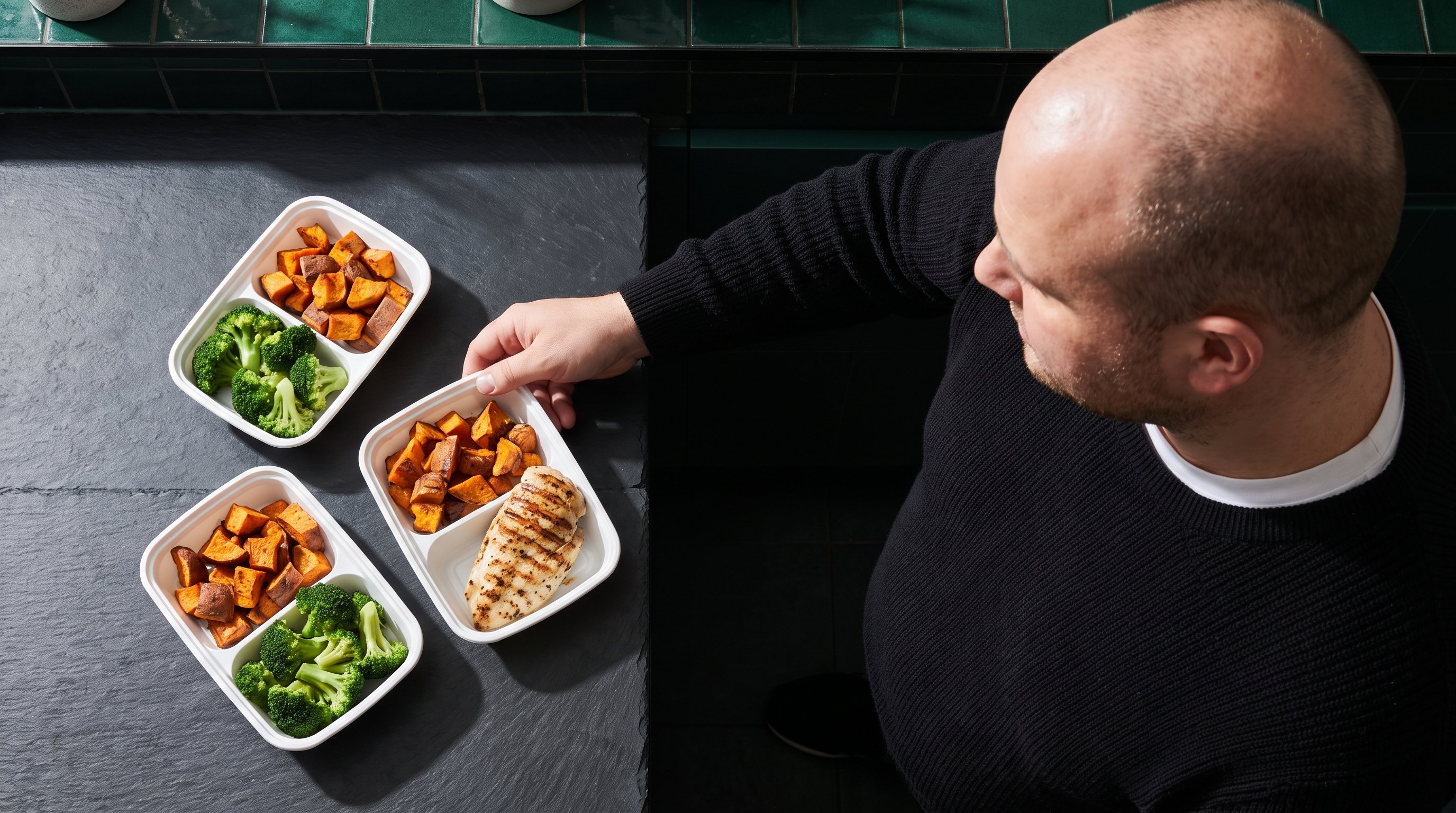
Pairing the sessions with a meal plan built around food you already like takes one more decision off your plate during the busiest part of the day.
Menletics keeps the workouts, a step counter and a water tracker in one place, so the week doesn't rely on remembering five different things.
The Myth of Spot-Reducing Fat With Bodyweight Moves
No amount of sit-ups will burn fat specifically off the stomach, and no amount of squats targets fat on the legs.
The body decides where it draws fat from during a deficit, and that decision isn't up for negotiation by exercise choice.
What bodyweight training actually does is build and maintain muscle while you eat in a deficit, which changes how your whole body looks once fat comes down generally.
So the honest answer is: train the whole body, eat consistently, and let the result show up wherever it shows up.
Building a Menletics Plan Around No Equipment Training
Once the habit of training bare-handed is in place, the next question is usually structure - what to do, in what order, and how to know when to add difficulty.
Menletics turns that into a progressive military calisthenics plan tailored to your fitness and goals, so the next session is always already decided.
It pairs the workouts with over 1,000 easy recipes and trackers for steps, water and weight, so training and eating sit in one place instead of five apps.
Get Your Personalized Plan
Burn Fat With Military Workouts
Starting Your No Equipment Routine Tonight
The fastest way to know if bare-handed training works for you is to do one session tonight - fifteen minutes, no excuses about kit or location.
Pick three moves, do them for two or three rounds, and write down what you managed so next week has something to beat.
If you'd rather not build the plan from scratch, Menletics lays the sessions out for you so the only decision left is showing up.
FAQ
Yes - muscle responds to effort and progressive challenge, and bodyweight moves like push-ups and squats can both be made harder by changing angle, tempo or range of motion. The ceiling is lower than loaded weights eventually allow, but most men have a long way to go before that ceiling matters.
A gym offers more ways to add load, but effectiveness also depends on how often a session actually happens. A no equipment routine that gets done four times a week usually outperforms a gym plan that gets done once.
Most bodyweight moves need less room than a yoga mat - a push-up, a squat and a plank all fit in a couple of square metres. A hallway or the end of a bed is usually enough.
Boredom usually means the moves haven't changed while your body has, so it's time to add reps, slow the tempo or try a harder variation of the same exercise. Menletics structures that progression for you, so the plan changes before boredom has a chance to set in.
Share this post