Protein Rich Meals: The Honest Guide For Busy Men
By:Author:Menletics Editorial
Updated on:September 30, 2026
- Does It Work? The Honest Arithmetic
- Why This Beats the Harder Alternative
- The Quantity Question: How Much Protein, How Often
- The Practical Question: Fitting This Into a Real Week
- Comparison: Whole Food Protein vs Convenience Options
- The Forbidden Promise, Answered Honestly
- Levers That Change the Result
- How Long Until You See Results?
- Your First Four Weeks
- What Stalls Progress
- Why Menletics Works for This
- Final Thoughts
A protein rich meal is any meal where protein makes up a meaningful share of the plate, not an afterthought sprinkled on top. Aim roughly for 25-40g of protein per meal and you cover most of what the body needs to repair muscle and stay full between meals.
The mechanism is simple. Protein takes longer to digest than carbs or fat, it supplies the amino acids muscle needs to rebuild after training, and it blunts hunger better than most other foods, which makes eating less calories feel less like a fight.
This guide covers whether protein rich meals actually work, how much protein you need, how to build a week of meals without living in the kitchen, and where most men fall off the plan before it has a chance to matter.
Does It Work? The Honest Arithmetic
Protein does not burn fat by itself, and no food does. What it does is make a calorie deficit easier to hold and gives muscle the raw material to keep or build during that deficit.
Here is the arithmetic. A typical man might need somewhere around 1.6-2.2g of protein per kilogram of bodyweight a day to support muscle while losing fat - for an 85kg man that is roughly 136-187g of protein daily, spread across 3-4 meals.
Split across four meals, that lands around 34-47g per meal, which is exactly the range that keeps hunger flat and makes the rest of the day's food choices less of a battle.
That is the whole trick. Protein does not do anything mystical - it just makes the maths of eating less easier to stick to, day after day.
Why This Beats the Harder Alternative
The harder alternative is calorie counting every gram of every meal, forever. Most men who try that quit within weeks because it is tedious and unforgiving of a busy schedule.
Building meals around a protein source first is a shortcut that gets you most of the same result with a fraction of the mental load.
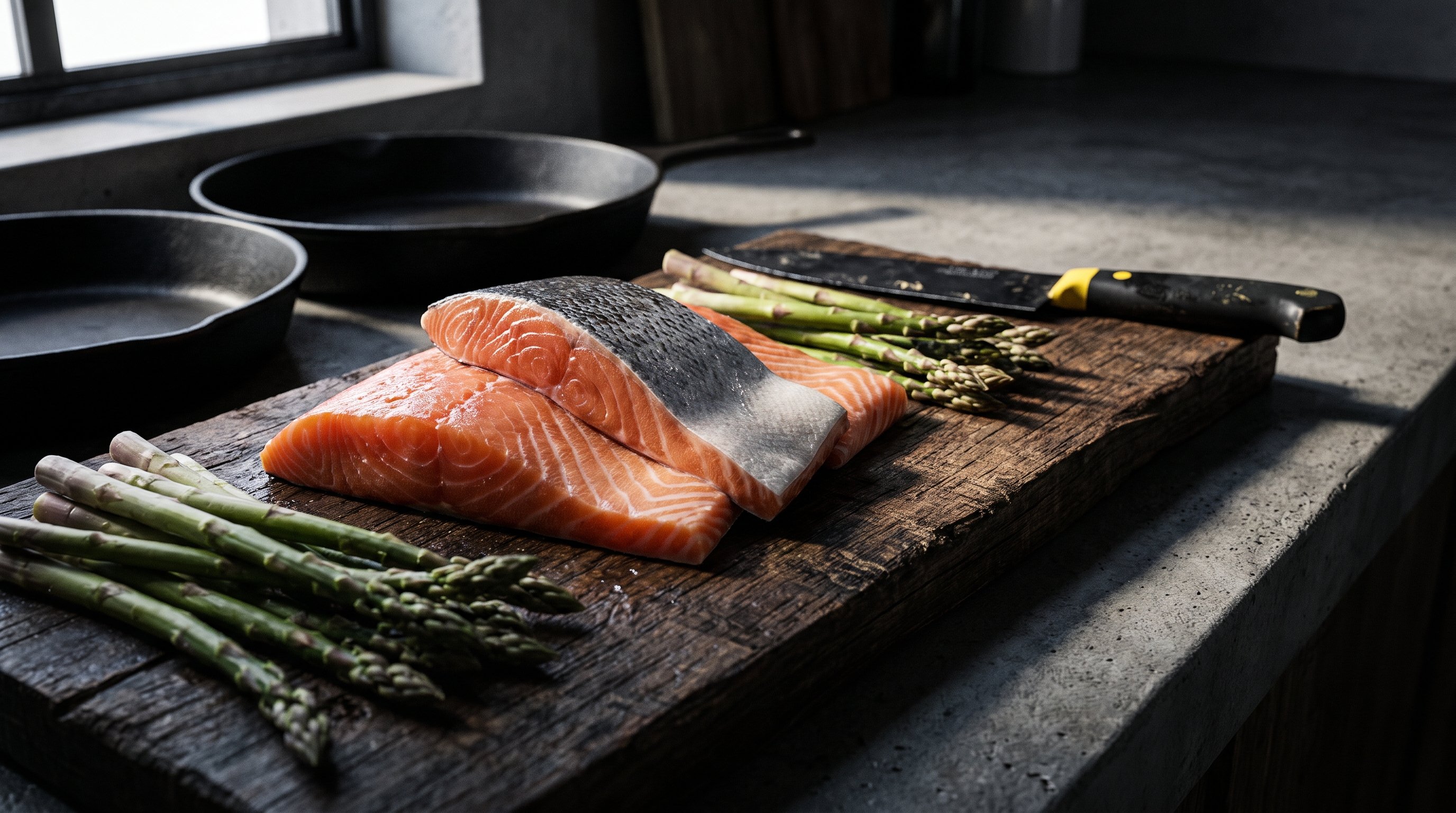
Pick the protein, add vegetables, add a modest carb source, and the calorie count tends to fall into a reasonable range without you tracking anything.
Substitution beats restriction because you are still eating meals you recognise - just built in a different order. That is the difference between a plan that lasts a few days and one that survives a busy month.
The Quantity Question: How Much Protein, How Often
There is no single perfect number, but there is a workable range. Most active men do well somewhere between 1.6g and 2.2g of protein per kilogram of bodyweight per day, spread across three to five meals rather than crammed into one.
Find Your Own Number
Take your bodyweight in kilograms and multiply by 1.6 for a floor and 2.2 for a ceiling - that range is your daily target, then divide it by how many meals you actually eat.
The table below gives a rough starting point by bodyweight, so you are not doing the maths from scratch every day.
| Bodyweight | Daily Protein Range | Protein Per Meal (4 meals) |
|---|---|---|
70kg | 112-154g | 28-38g |
80kg | 128-176g | 32-44g |
90kg | 144-198g | 36-49g |
100kg | 160-220g | 40-55g |
The Practical Question: Fitting This Into a Real Week
Knowing the numbers is one thing. Cooking a protein rich meal four times a day, five days a week, while working a full job, is the part that actually trips people up.
The fix is not more willpower, it is fewer decisions - a meal plan with recipes already built around a protein target means you are not doing the maths above every single day.
Menletics includes a meal plan with over 1000 easy-to-follow recipes, built so protein is already accounted for in each one - you pick a recipe that fits your day rather than reverse-engineering the numbers yourself.
Pair that with the app's tracking tools for water, weight and steps, and the food side of the plan stops being a separate project from the training side.
Comparison: Whole Food Protein vs Convenience Options
Most men weigh the same decision every week - cook from scratch, grab a convenience option, or some mix of both.
Neither side is wrong. The table below lays out the trade-offs so you can pick what fits your week, not someone else's.
| Option | Cost | Prep Time | Protein Per Serving |
|---|---|---|---|
Chicken and rice | Low | 20-30 minutes | 35-40g |
Eggs and toast | Low | 10 minutes | 20-25g |
Tinned fish and beans | Low | 5 minutes | 25-30g |
Protein shake | Medium | 2 minutes | 20-30g |
Pre-made meal box | High | 3 minutes | 25-35g |
The Forbidden Promise, Answered Honestly
No, a protein rich meal will not target fat on your stomach, chest or anywhere else - the body does not choose where it loses fat from, no matter what the meal contains.
There is also no overnight version of this. Eating more protein today will not change how you look tomorrow, and nothing legitimate works that fast.
What actually happens is slower and less exciting - protein supports the deficit you are already running, and over time the combination shows up as less fat and steadier muscle, spread across the whole body, not one spot.
Levers That Change the Result
Not every change matters equally. These three carry most of the weight, in order.
What Actually Moves the Needle
- Total protein across the day - hitting your range matters more than any single meal being perfect.
- Consistency across the week - one good day surrounded by five random ones barely counts.
- Meal timing around training - eating protein near your workout window helps recovery, but it is a smaller factor than the two above.
How Long Until You See Results?
This is where most men quit - somewhere in the first couple of weeks, when nothing visible has changed yet and the new habit still feels like effort.

That gap is normal. The internal changes - steadier energy, less hunger between meals, muscle holding up better during training - tend to show up before anything visible does.
Stick with the habit through that flat stretch rather than judging it week to week, and the payoff tends to arrive later than people expect but more reliably than a crash approach ever does.
Your First Four Weeks
The order you build these habits in matters more than hitting every number perfectly from day one.
| Week | Focus |
|---|---|
Week 1 | Add protein to breakfast |
Week 2 | Add protein to lunch and dinner |
Week 3 | Hit your daily protein range most days |
Week 4 | Prep meals ahead for the busy days |
What Stalls Progress
Skipping Breakfast Then Overeating Protein at Dinner
Front-load one protein source into whatever you eat first in the day, even something small, so you are not trying to hit your whole target in one sitting.
Relying Only on Shakes
Shakes are convenient but whole food fills you up more per gram of protein - keep at least two meals a day built around real food.
No Plan for Busy Days
The days you skip planning are the days you default to whatever is fastest, which is rarely protein rich - batch-cook one protein source at the start of the week as a backup.
Chasing a Number You Never Check
If you never actually total up your protein for a day, you cannot know if you are close to your range - track it loosely for a few days, then trust your habits.
Treating This As Separate From Training
Protein without a reason to use it is just extra food - pair it with a consistent workout habit so the body has something to build with.
Why Menletics Works for This
Menletics pairs a meal plan built around easy protein rich recipes with a Military Calisthenics workout plan, so the food and the training pull in the same direction instead of being two separate projects.
Add in the metabolism-boosting tips, the progress trackers for weight and water, and the challenges designed to keep you consistent, and the whole thing stops depending on you remembering a protein target every single day.
Final Thoughts
Protein rich meals are not a trick and they are not magic - they are a way of making the harder job of eating less feel a lot less hard, meal after meal.
Start with one meal, add protein to it this week, and let the rest follow - Menletics can carry the recipe and tracking side of that so the only thing left for you to do is show up.
FAQ
Not strictly, but spreading it across three to five meals a day tends to keep hunger flatter than loading it all into one sitting. Aim for the daily range first and let the split fall wherever fits your schedule.
It is not restrictive in the usual sense because you are adding a food group rather than cutting whole categories out. The approach works by making meals more filling, not by banning anything.
Batch-cook one protein source at the start of the week and lean on quick options like eggs, tinned fish or a shake on the busiest days. A meal plan with ready-made recipes, like the one inside Menletics, removes most of the daily decision-making.
The early weeks are usually the least visible part of the process, even when the habit is working underneath. Give it longer than a week or two before judging it, and check consistency across the whole week rather than any single day.
Share this post