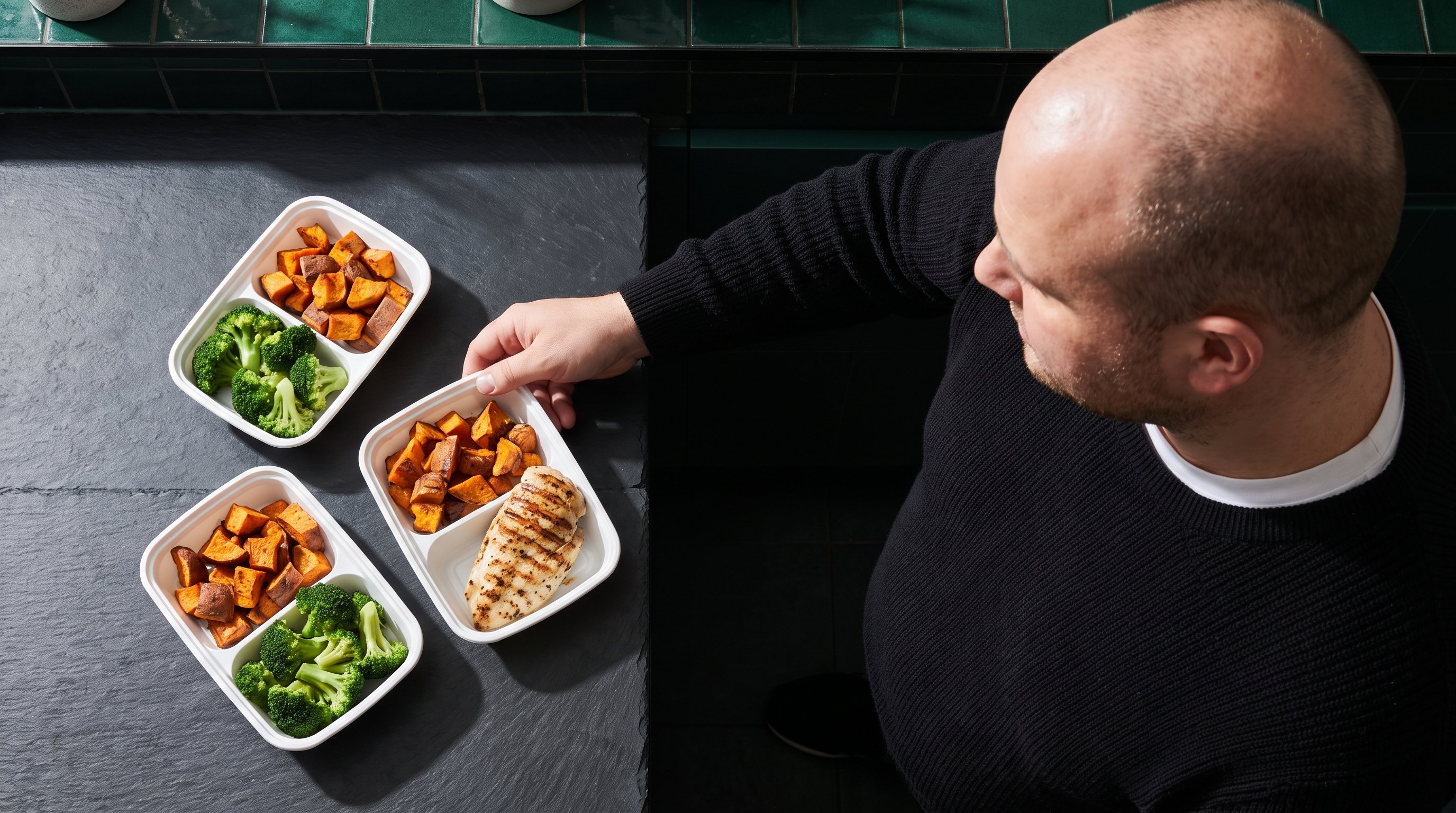
Protein Rich Meals: The Honest Guide For Busy Men
By:Author:Menletics Editorial
Updated on:October 28, 2026

- Do Protein Rich Meals Actually Help With Fat Loss
- How Protein Actually Builds and Protects Muscle
- How Much Protein a Day Actually Makes Sense
- Why High-Protein Meals Beat Strict Macro Counting
- Fitting Adequate Protein Into a Working Week
- The Myth of One Protein Shake Fixing Everything
- What Changes the Result Most
- Mistakes That Quietly Undermine High-Protein Eating
- Building Protein Rich Meals With Menletics
- Making Protein Rich Meals a Habit That Sticks
Protein rich meals help because protein keeps you fuller on fewer calories and gives your body the raw material to hold onto muscle while you lose fat. That is the whole mechanism - nothing mystical about it.
Protein takes more effort for your body to digest than carbs or fat, and it blunts hunger more per gram eaten. Stack a few high-protein meals across a day and the calorie deficit that drives fat loss gets a lot easier to sit inside without feeling starved.
This guide covers whether the approach actually works, how much protein a day realistically means, how to fit it around a working week, and the mistakes that quietly undo it.
Do Protein Rich Meals Actually Help With Fat Loss
Yes, and the reason is simple arithmetic plus appetite control, not anything magic in the food itself.
Say a man eats 2,200 calories a day to lose weight. If 150g of that comes from protein, that is 600 calories - over a quarter of his day - spent on the macronutrient that keeps him fullest for longest.
Protein also costs more energy to process than fat or carbs, since your body burns some calories just digesting it. That is not a loophole to eat more overall - it just means protein-heavy calories go slightly further than the same calories from oil or sugar.
None of this works if total calories are too high. Eating enough protein makes the deficit easier to hold, not a replacement for one.
How Protein Actually Builds and Protects Muscle
Two separate jobs get lumped into one claim, and splitting them makes the whole topic clearer.
Protein Protects Muscle During a Deficit
When you eat fewer calories than you burn, your body will pull energy from wherever it can, including muscle. Eating enough protein signals your body to spare muscle tissue and lean on stored fat instead, which is why a calorie deficit paired with low protein tends to cost more muscle than one paired with high protein.

Protein Supplies the Material for Repair
Training, especially bodyweight work that loads muscle under tension, creates small amounts of damage that your body rebuilds slightly stronger. Protein supplies the amino acids for that rebuild - skip it and the training still happens, but the recovery has less to work with.
Put together: protein does not build muscle by itself, and it does not torch fat by itself. It protects what you have and feeds the repair that training demands.
How Much Protein a Day Actually Makes Sense
There is no single magic number, but a workable range exists for most men trying to lose fat or hold onto muscle while active.
A Simple Way to Land on a Number
A common starting point many men use is somewhere around 1.6 to 2.2g of protein per kilogram of bodyweight, spread across three to four meals so no single sitting has to carry the whole day. For an 85kg man, that lands between roughly 136g and 187g a day - split across four meals, that is about 34g to 47g per meal, which is realistic from ordinary food.

The table below shows common protein sources and roughly what a standard serving contributes, so you can see how fast a day adds up.
| Food | Protein Per Serving |
|---|---|
| Chicken breast, 150g | Around 35g |
| Greek yoghurt, 200g | Around 20g |
| Eggs, 3 whole | Around 18g |
| Tinned tuna, 1 can | Around 25g |
| Lentils, cooked 200g | Around 18g |
Why High-Protein Meals Beat Strict Macro Counting
There are two routes to the same outcome here, and one survives a real week better than the other.
Route one is weighing every gram, logging every meal down to the decimal, and treating food like a spreadsheet. It works in theory, but most men drop it within a few weeks because it is tiring and unforgiving of a busy Tuesday.
Route two is simpler: build each meal around a clear protein source first, then fill in the rest. You are not hitting an exact number every day, but you are consistently close - and consistently close, repeated for months, beats perfect for two weeks then abandoned.
The easier route wins because it survives contact with a real schedule, not because it is less effective on paper.
Fitting Adequate Protein Into a Working Week
The hardest part of eating enough protein is rarely the eating - it is the planning, especially when work, commuting and family time eat up the hours you'd use to cook.
Batching two or three protein sources at the start of the week - a tray of chicken, a pot of lentils, some hard-boiled eggs - means every meal that follows starts from something already done. That alone removes most of the friction that causes people to skip protein and grab whatever is fastest.
A meal plan built around food you already like makes this far less effort to sustain, since you are not forcing down meals you don't want just because they hit a number. That is where a tool like Menletics fits in - it gives you a starting structure so you are not rebuilding the plan from scratch every single week.
The Myth of One Protein Shake Fixing Everything
A lot of men assume one big protein shake after training does the heavy lifting for the whole day. It does not, and here is why.
Your body can only use so much protein at once for repair - spreading intake across the day works better than loading it all into one sitting. A single shake also will not undo a day of low-protein meals any more than one good workout undoes a week of no training.
The real answer is unglamorous: protein spread evenly across three or four meals, day after day, does the job that one shake never could.
What Changes the Result Most
Three things matter more than anything else once protein is roughly in place.
The Factors That Move the Needle
- Total calories across the week - protein helps you hold a deficit, but if overall intake runs too high, fat loss stalls regardless of how much protein is on the plate.
- Consistency over weeks, not days - one strong day of eating well means little; the pattern repeated for a month is what shows up on the scale and in the mirror.
- Training that gives muscle a reason to keep itself - bodyweight or resistance work signals your body to use that protein for repair rather than storing the extra calories elsewhere.
Mistakes That Quietly Undermine High-Protein Eating
Loading All the Protein Into One Meal
Eating 10g at breakfast and 90g at dinner leaves most of the day with nothing to work with. Spread it closer to evenly across three or four meals instead.
Forgetting the Calories Around the Protein
A chicken breast swimming in oil or a protein bar loaded with sugar still counts toward total calories. Keep an eye on what the protein is served with, not just the protein itself.
Relying Only on Supplements
Shakes and bars are convenient, but whole food sources like eggs, fish and legumes bring other nutrients a powder does not. Use supplements to fill gaps, not to replace meals entirely.
Giving Up After One Inconvenient Week
Travel, late shifts or a bad week at work will throw off any plan. Treat it as one off-week, not proof the whole approach failed.
Building Protein Rich Meals With Menletics
Knowing you need roughly 35g to 45g of protein per meal is one thing - actually building meals that hit that without repeating the same three dishes every week is another.
Menletics includes a meal plan with over 1,000 recipes, so high-protein eating stops being a guessing game and starts being a rotation you can actually look forward to. Pair that with the step, water and weight tracking built into the app and you get a clearer picture of whether the eating side is actually matching the training side.

Get Your Personalized Plan
Burn Fat With Military Workouts
Making Protein Rich Meals a Habit That Sticks
Start with one change this week: pick a protein source for each main meal before you decide anything else on the plate.
Do that consistently and the rest of the eating tends to fall into place around it. Menletics can take some of the planning off your hands if cooking from scratch every night isn't realistic right now.
FAQ
Not on their own - fat loss still comes down to eating fewer calories than you burn over time. Protein just makes that deficit easier to hold because it keeps you fuller for longer.
Eggs, tinned fish, lentils and chicken thighs are among the cheaper protein sources, not the priciest ones. You do not need premium cuts of meat every day to hit a reasonable protein target.
Batch cooking two or three protein sources once or twice a week removes most of the daily effort. A structured meal plan, like the one inside Menletics, can also take the planning off your plate entirely.
Repetition is usually the real culprit, not a lack of discipline - the same three meals on rotation get boring fast. Rotating recipes and sources keeps protein-focused eating from feeling like a chore.
Share this post